Skip to content

Category Archives: Strategy

Posted inStrategy

Flight path to equality: The importance of Women in Aviation Networks

Aviation has always been a field driven by innovation, technology, and exploration. It has long been perceived as a male-dominated field, but the contributions of women have been significant and transformative. From the early pioneers who defied societal norms to modern-day leaders who continue to break barriers, their journeys illustrate not only the evolution of aviation but also the fight for equality and recognition within a traditionally male-dominated field.

According to the International Civil Aviation Organization (ICAO), women represent approximately 4.9% of pilots, air traffic controllers, and maintenance technicians worldwide in 2021. IATA reports that only 6% of airline CEOs are women, which grew three percent from 2019 to 2021. A 2020 Australian-based study from the federal Workplace Gender Equality Agency highlighted the connection between increasing women in key management roles and the company’s market value; for a 10% increase in key management personnel led to a 6.6% increase in market value. These figures are a clear indicator of progress and the benefit of women in the workforce, but also highlights how underrepresented women remain.

This article delves into the legacies of those who paved the way, highlights the importance of women’s conferences and groups, and explores the future landscape of women in aviation.

Women that paved the way

The history of women in aviation is rich with remarkable individuals who challenged the status quo. Amelia Earhart, became the first woman to fly solo across the Atlantic, inspiring generations of women to take to the skies. Nancy Bird Walton made history as the first and youngest woman in Australia to earn a licence to carry passengers. She went on to found the Australian Women Pilots’ Association, championing women’s advancement in aviation. Deborah Lawrie made her own historic mark as the first woman to work as a commercial pilot, opening the door for countless other women to follow in her footsteps.

Today, women are playing a pivotal role in the leadership of some of the world’s most influential airlines and airports, continuing the legacy of those who paved the way before them. Female CEOs such as Marjan Rintel (KLM) and Vanessa Hudson (Qantas), have shattered the glass ceiling. Angela Gittens is a world leader in airport management having been the CEO of Miami and Atlanta Airport and the Director General of ACI World and Yvonne Makolo (CEO of RwandaAir) is the first female Chairperson of the International Air Transport Association. In the airport sector, Lorie Argus (Melbourne and Launceston Airports) and Amelia Evans (Queensland Airports) are making their mark on the Australian aviation landscape. Newcastle Airport Board is 60% female with Jude Munro AO, Samantha Martin, Lee de Winton, Leah Anderson and Katie Cooper all applying their experience to ensure the success of the airport. These pioneers not only achieved remarkable feats but also laid the groundwork for future generations of female aviators and leaders in aviation.
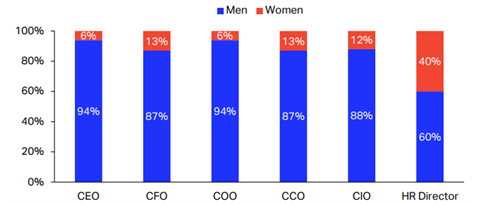
Women in Leadership Positions at Airlines in 2021

Why are women conferences and group so important?

Women-focused conferences and organisations are vital in fostering a supportive environment for women in aviation. These gatherings such as AAA Women in Airports Forum 2024 and events organised by groups such as Women in Aviation/Aerospace Australia and Women in Aviation Australian Chapter offer attendees the opportunity to connect with industry leaders, gain insights into career advancement, and find inspiration from others who have faced similar challenges.  We attended the AAA Women in Airports 2024 on the 18th of November last year and enjoyed meeting all the wonderful attendees.

Participating in women conferences offers numerous advantages for personal and professional growth. The table below outlines some of the key benefits these events provide, from enhancing career opportunities to fostering a supportive network.
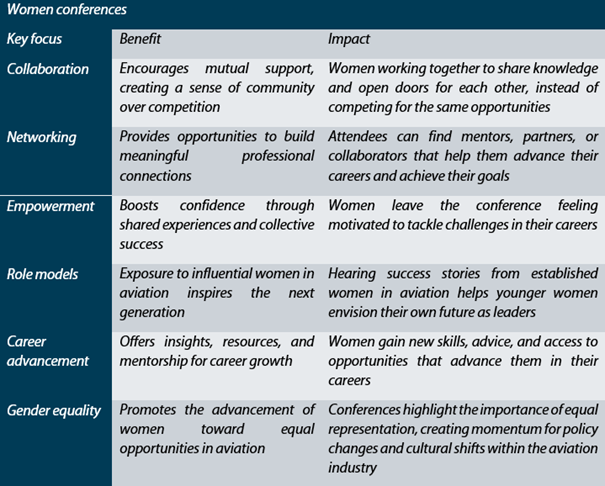
Equally important is the involvement of men in these events. Men attending women’s conferences, like our colleague Trent Kneebush, who attended the Women in Airports forum 2024, have the opportunity to hear firsthand the challenges women face. This fosters empathy, awareness, and a shared commitment to gender equality. When men actively listen to these conversations, they can become allies that actively break down systemic barriers. At To70, we believe this collaborative approach ensures that diversity and inclusion efforts are shared by everyone, not just women.

The importance of women’s conferences and groups cannot be overstated—they are a catalyst for change, growth, and empowerment for all women.

Where do we see this going?

As we look ahead, the role of women in aviation continues to evolve and expand. Initiatives to promote diversity and inclusion are gaining momentum, with organisations like Women in Aviation/Aerospace Australia or Women in Aviation International working tirelessly to inspire and support women in the industry. These groups offer mentorship programs and networking opportunities to encourage young women to pursue careers in aviation and aerospace.

To70 has recognised the importance of female leadership with Araya Sakburanapech, Wenjing Zhou and Ella Soltani leading the To70 Thailand, China and Belgium offices respectively. We are proud to have a workforce that is 32% female, and the company is working with the women within to ensure they feel supported, respected, and empowered to succeed at all levels.

The airline industry’s regulatory body – International Air Transport Association (IATA) is the second organisation that has taken initiatives to set a milestone to eliminate the gender pay gap in the aviation industry by obtaining the global EQUAL-SALARY certification covering all its employees throughout the world.

Challenges remain, of course. Gender bias and stereotypes still exist, and the aviation community needs to continue to work toward fostering an inclusive environment. Advocacy for policies that support work-life balance, equal pay, and professional development will be crucial in ensuring that women can thrive in the industry.

Wrap up

The aviation industry is at a pivotal moment, with increasing opportunities for growth and inclusion. Conferences and organisations dedicated to women in aviation play a key role in fostering connections and empowering careers. By promoting diversity and inclusivity, we can ensure women continue to shape the industry’s future and drive its progress.


References


ABOUT THE AUTHOR

Athira Kuberan

Athira is an Aviation Consultant at To70, Melbourne. As a Master of Science (Aviation) graduate from RMIT University, she has a strong academic background in aviation. Athira is part of many Women in Aviation groups and was also part of the mentorship program. Working with To70, she was involved in airport planning, demand and capacity modelling, and slot utilisation. She has also developed analytical expertise in Fast Time Simulation and AEDT noise modelling.

ABOUT THE AUTHOR

Jazmin Tweddle-O’Donnell

Jazmin is an Aviation Consultant and serves as the Victorian Chair of the Women in Aviation Australian Chapter. She holds a Bachelor of Aviation Management and a Certificate IV in Work, Health, and Safety. With a diverse portfolio, Jazmin works on airport infrastructure, Master Planning, and Australian Noise Exposure Forecast (ANEF) projects. She has extensive expertise in AEDT Noise Modelling and Fast-time Simulation, contributing valuable insights and technical skills to complex aviation initiatives.

ABOUT THE AUTHOR

Elvira Marques

Elvira is a Junior Aviation Consultant at To70 Australia and a member of the Queensland Sub-Committee for Women in Aviation/Aerospace Australia. She earned a PhD in Aviation from Griffith University, where she specialised in pilot training, and a Master of Aviation Management, which provided her with a deep understanding of safety management systems, airport planning, and airline management. Her professional background includes serving as a sessional lecturer at Griffith University and engaging in research projects with Boeing Research and Technology.

Posted inEnvironment, Strategy

Towards 2050: Shaping a Future-Ready Industry

The Australian Aviation White Paper is a detailed policy framework designed to chart the future of this country’s aviation industry towards 2050. Released on August 26, 2024, it sets out the Australian Government’s strategy for the safe, competitive, productive, and sustainable future of the country’s aviation industry.

The White Paper and its 56 policy objectives were developed after extensive consultation with the aviation industry, state and territory governments, and Australian communities (on an initial Aviation Green Paper). The White Paper is a long-term agenda focused on establishing Australia as a global leader in aviation innovation and resilience.

Commitment to a Sustainable Future

The White Paper mainly focuses on Australia’s commitment to maximising aviation’s contribution to net zero emissions by 2050. The government recognises that decarbonising the sector, which largely depends on fossil fuels, is imperative. Some of the key strategies include promoting Sustainable Aviation Fuels (SAF) and offering incentives to spur domestic production and adoption. The keystone of this vision is SAF, which cuts emissions by up to 80% compared to traditional jet fuel. The government is offering incentives and funding for the domestic production of SAF and other low-carbon liquid fuels (LCLF) for A Future Made in Australia.

In addition, to improve fuel efficiency, investments in next-generation aircraft technologies, such as electric and hydrogen-powered aircraft, and improvements in air traffic management are being made. All these actions connect Australia’s objectives with global climate commitments while positioning the country as a leader in green aviation.

Enhancing Regional Connectivity

Regional airports are also essential for connecting Australia’s large and frequently isolated areas. The White Paper highlights the expansion of funding for regional airports and improves infrastructure to support safety, capacity, and access to larger aircraft. The government is also reviewing regional airfare affordability in the Productivity Commission to ensure that communities that rely on aviation for essential services, such as education and medical transportation, are not disadvantaged.

The focus on connectivity also includes efforts to integrate regional airports more effectively into the broader transport network to support economic growth and regional development.

Addressing Workforce Challenges

The aviation industry is severely short of trained professionals, and pilots, engineers, and air traffic controllers are particularly hard hit. Training programs are planned to increase, and academic institutions are being collaborated with to create a trained regional workforce.

The biggest airlines will be encouraged and, in many cases, mandated to invest in people’s development and growth. The government’s aim to fill the skills gap is even evident in the penalties implemented on organisations that are non-compliant with these promises. The steps taken to promote diversity initiatives include encouraging the involvement of women and Indigenous Australians as much as possible.

Infrastructure and Airport Reforms

The White Paper emphasises developing and updating Australia’s airport infrastructure, as air traffic will likely grow exponentially. Western Sydney International Airport will be opened in 2026, and it will boost the quality of passenger service while reducing airport congestion.

Major airport slot allocation system reform aims to enhance competition while ensuring fair access to existing and new competitors. Hence, these steps, combined with proper supervision by the Australian Competition and Consumer Commission, ensure an equitable interaction between airlines and airport operators and prevent monopolistic behaviour.

Embracing Emerging Technologies

Integration of Advanced Air Mobility (AAM) vehicles with drones is important for implementing and using emerging technologies. The government has envisioned legislation that would balance innovation with societal concerns like safety, privacy, and noise pollution, thereby successfully deploying innovative technologies.

Emerging technologies are already revolutionising emergency services, agriculture, and logistics. The White Paper’s proactive approach to Uncrewed Aircraft Management (UAM) ensures Australia is leading the innovation in aviation globally.

A Vision for 2050

The White Paper offers a long-term vision of an inventive, sustainable, and equitable aviation industry. It will continue emphasising flexibility by adapting policies to embrace new opportunities and problems. The framework shall make Australian aviation resilient and visionary by encouraging cooperation among various stakeholders and adhering to international best practices.

The White Paper presents many opportunities for To70 to be part of shaping the future of the aviation sector in Australia and the communities that interact with our industry. It provides detailed guidance on policy priorities, challenges, and opportunities, providing consultants a roadmap to deliver innovative and impactful solutions. The art of transforming such high-level insights into practical, tailor-made solutions delivers success for our clients while also making To70 trusted advisors in the changing landscape of policies.


References

  1. Aviation White Paper
  2. How will we improve the aviation sector – Towards 2050
  3. Delivers for customers, regions and workforce
  4. Aviation White Paper has landed
  5. The Government White Paper
  6. Hawker Britton – Government Relations Strategy
  7. Australian Government’s Aviation

Posted inEnvironment, Strategy

Airport Carbon Accreditation: Expansion in Brazil

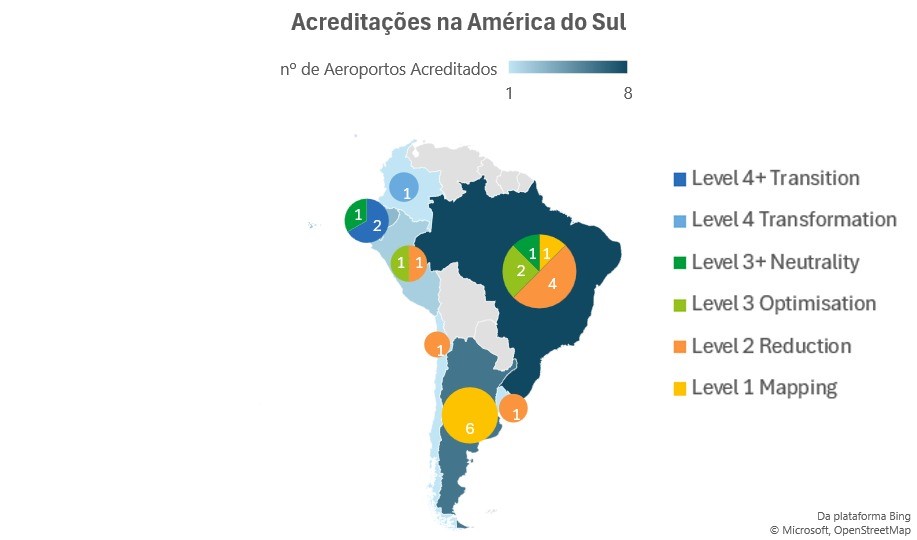
Sustainability in the airport sector is a growing concern, and reducing carbon emissions has become a global priority. Brazil has stood out in South America for its progress in the Airport Carbon Accreditation (ACA) Program, both in terms of the number of accredited airports and the diversity of certification levels achieved. What is driving this prominence and how is Brazil expanding its carbon management practices in the airport sector? Below, we analyze the current scenario and the prospects for expansion.

Analysis and Expansion of Accreditation in Brazil

During the XXI SITRAER (Air Transportation Symposium), representatives of To70 Brasil, including the company’s manager in the country and one of its employees, presented the article “Comparative Analysis of Carbon Accreditation in South American Airports: Focus on Brazil and Expansion Perspectives”. The study presented a comprehensive analysis of carbon accreditation among airports in South America, with an evaluation by airport size and passenger demand at accredited airports.

Brazil leads South America in the Airport Carbon Accreditation Program, with 9 of the 22 accredited airports in the region. These airports have a variety of certifications, ranging from initial to advanced levels. This leadership is due, in part, to the strong performance of operators such as Zurich Airport Brasil, BH Airport, Vinci Airports, Rio Galeão, Inframerica and Infraero, which have promoted the adoption of robust carbon management practices.

In addition, these and other concessionaires are also expanding their carbon management initiatives, adhering to programs such as the GHG Protocol’s Brazilian Public Registry, which allows for transparent monitoring of emissions, and participating in awards such as Sustainable Airports, promoted by the National Civil Aviation Agency (ANAC). These actions show a broader effort in the sector to align with global decarbonisation targets and contribute to more sustainable aviation in Brazil.

Despite this progress, there is still enormous potential for growth. With 504 public aerodromes, of which 63 are operationally certified and another 22 are in the process of being certified by ANAC, many airports can benefit from the ACA program. The expansion of airport concessions and re-bidding are factors that should accelerate this uptake, further expanding Brazil’s presence on the international airport sustainability scene.

To70 consulting in the ACA Program

To70 Brasil is currently assisting eight Brazilian airports in the ACA Program certification process. Three of these airports are advancing to level 4 (Transformation), which requires not only emissions management, but also the absolute reduction of emissions in partnership with third-party operations. This level reflects a profound operational change to achieve decarbonisation goals.

In addition, another five airports are entering the program at level 1, which marks the first step in monitoring and managing their carbon footprints. To70 provides technical advice to help these airports develop emissions inventories, identify reduction opportunities, and prepare for more advanced levels of certification, aligning their operations with global sustainability best practices.

To wrap up

Brazil has shown a significant commitment to decarbonising the airport sector, leading South America in terms of airports accredited by the ACA Program. The growing participation of airports in the program reflects an expansion trend that is expected to intensify in the coming years, driven by the entry of new operators and the strengthening of concessions.

To70 Brasil will continue to play a leading role in this movement, providing expertise and innovative solutions to support airports on their journey towards emissions reduction and carbon certification. By doing so, To70 contributes directly to the development of more sustainable and efficient aviation in Brazil and throughout South America.


ABOUT THE AUTHOR

Mateus Reis

Professional with a career in Environmental Engineering, focusing on Environment and Sustainability, with 5 years’ experience in aspects inherent to environmental management and airport operations. During his work with the airport operator, he helped develop a tool for calculating the carbon footprint and controlling evidence, which was recognized and awarded by ACI/LAC. At To70, he focuses on Net Zero and ESG roadmaps, as well as supporting ACA program accreditations.


Posted inEnvironment, Strategy

Thailand’s Sustainable Aviation Fuel Initiative: Establishing a Sustainable Future for Aviation

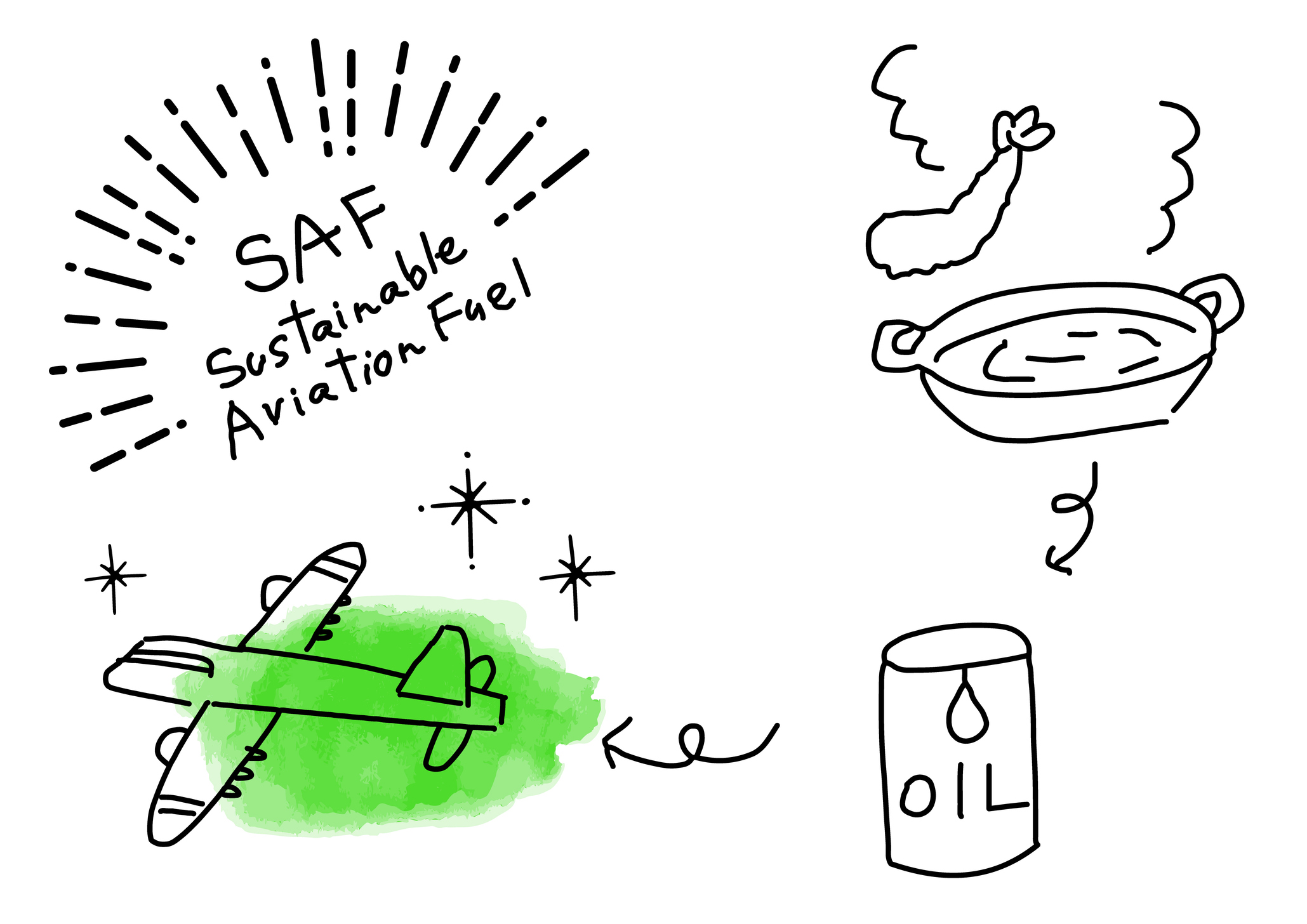
As the global aviation industry seeks ways to reduce its environmental impact, Sustainable Aviation Fuel (SAF) has emerged as a promising solution. SAF offers a viable path to significantly cut carbon emissions from air travel, thereby contributing to global climate goals. In line with the International Civil Aviation Organization’s (ICAO) policy of achieving net-zero carbon emissions by 2050, Thailand is at the forefront of this green transition. This blog explores the current state, challenges, and the prospects of Thailand’s SAF initiative, highlighting how SAF not only reduces carbon emissions but also benefits other industries.

Current Status and Key Players in SAF Adoption 

In the recent years, Thailand has made tremendous efforts in adopting SAF. Local airlines and airports have started to incorporate SAF into their operations, demonstrating their commitment to sustainability. For example, a major airline has already conducted several successful SAF test flights to showcase the feasibility and safety of this alternative selection of fuel. Several airlines are set to follow the trend by scheduling their SAF test flights within the premise of this year. Moreover, major airports and authorities have begun their project to incorporate SAF into their fuel supply chains, setting a precedent for others to follow.

Thailand’s local production capabilities are also worth to be looking at. With the growing interest in SAF, the country has invested in building infrastructure to support SAF production, both from the government and the private sector, focusing on levering domestic resources. Thailand’s rich agricultural provides a plentiful supply of feedstocks, such as used cooking oil and agricultural residues, which are essential for producing SAF. Major companies in the energy sectors are also play important roles in the production of SAF, with the cooperation of one of the biggest aviation fuel services companies, they aim to start the production of SAF to be at 1,000,000 Liters per day mainly form used cooking oil, beginning at
the fourth quarter of 2024 for the global use in the aviation industry. 

Government and aviation sector cooperation must be strong for Thailand’s SAF effort to succeed. The Thai government will have to collaborate extensively with airlines, fuel companies, and other stakeholders to create a favourable climate for SAF adoption. This includes creating supportive legislation, providing financial incentives, and facilitating R&D. Key airlines have played an important role in furthering the SAF agenda. By investing in SAF and participating in trial programs, these carriers have shown their viability and encouraged greater industry participation. Furthermore, international cooperation has been crucial in Thailand’s SAF path. The country has formed various partnerships and agreements with international organizations to encourage, participates in an international aviation organization’s carbon offsetting and reduction plan, which promotes the use of SAF to reach emissions reduction targets.

Moreover, the Civil Aviation Authority of Thailand (CAAT) is positioned as a pivotal actor in driving forward and endorsing the new policy initiatives surrounding Sustainable Aviation Fuel (SAF). As Thailand advances its commitment to sustainability in aviation, CAAT’s proactive role becomes increasingly vital. They are tasked with not only advocating for SAF adoption but also with establishing robust regulatory frameworks that uphold international standards.

Broader Benefits of SAF: Beyond Carbon Emissions

One of the most compelling aspects of SAF is its potential to benefit industries beyond aviation, particularly in agricultural sectors. By utilizing agricultural residue and non-food crops as feedstocks for SAF production, the initiative supports the agricultural sector in several ways:

Boosting the Agricultural Economy

The additional revenue stream for local farmers could be generated by selling agricultural residues which would otherwise be considered waste, such as rice straw and sugarcane bagasse.  This could significantly enhance the livelihoods of local farmers and remarkably contribute to the rural economy. Moreover, new opportunities and markets may arise for the farmers by cultivating energy crops specifically for SAF production.


Enhancing Waste Management

SAF not only benefits the agricultural sector in terms of economic growth, but also helps the sector to promote better waste management techniques and practices by converting agricultural waste into valuable fuel. This not only reduces the environmental impact of agricultural waste disposal but also contributes to a circular economy where waste materials are repurposed and reused efficiently.

Challenge and Future Prospects

One of the primary challenges in SAF adoption is its economic viability. Currently, SAF is more expensive to produce than conventional jet fuel, primarily due to the high costs of feedstocks and production processes. This price disparity poses a significant barrier to widespread SAF adoption.

However, the Thai government has implemented various measures to address this challenge. Financial incentives, subsidies, and tax breaks are being offered to airlines that use SAF, helping to offset the higher costs. Additionally, continued investment in research and development is expected to drive down production costs over time, making SAF more economically competitive.

A critical development is the draft version of an act of legislation that is in place and expected to be approved by the Thai parliament by the middle of this year. This legislation aims to solidify the government’s commitment to SAF and provide a legal framework that supports its adoption and production. It is expected to include measures such as mandatory blending quotas, tax incentives, and subsidies, which will make SAF more competitive and attractive to investors.

CAAT’s active involvement ensures that the SAF initiatives align with global best practices and regulatory requirements. This includes overseeing the safety, quality, and operational standards of SAF production, distribution, and usage within Thailand’s aviation sector. By setting clear guidelines and standards, CAAT aims to instil confidence in SAF among stakeholders, including airlines, airports, and fuel suppliers. Furthermore, CAAT will be collaborating closely with government bodies and industry stakeholders to harmonize SAF policies with global aviation standards and environmental goals. Their efforts extend beyond regulatory oversight to fostering partnerships that promote research, innovation and the development of sustainable aviation solutions.

Looking ahead, continued policy support and incentives will be crucial for the growth of the SAF market in Thailand. The Thai government is committed to creating an enabling environment for SAF adoption, with plans to introduce more supportive policies and increase financial incentives. These measures are expected to drive greater investment in SAF production and adoption, helping Thailand achieve its sustainability goals. By fostering a conducive policy environment, Thailand can attract more players to the SAF market and ensure its long-term viability.

Takeaways 

Thailand’s SAF initiative represents a bold and proactive step towards sustainable aviation. By integrating government support, industry collaboration, and technological innovation, Thailand is paving the way for greener skies. The challenges are significant, but the opportunities are even greater. Continued efforts to promote SAF adoption will not only help Thailand achieve its sustainability goals but also position the country as a leader in the global transition to sustainable aviation. Moreover, the broader benefits to industries such as agriculture highlight the multi-faceted advantages of the SAF initiative, fostering a more sustainable and economically vibrant future.

At To70 Thailand, we are proud to be at the forefront of SAF initiatives in the country. Our team is actively involved in various projects and research efforts to explore and maximize the opportunities presented by SAF in Thailand’s aviation sector. Through our expertise and commitment, we are dedicated to driving forward the adoption and development of sustainable aviation fuels, contributing to a greener and more sustainable future for Thailand.


Read more Articles and News

Posted inCapacity, Strategy

Fast-Time Simulation, as an airspace planning and development tool

Aviation has been growing at a rapid pace, and at times it may seem that efforts are not enough. Despite advancements in aircraft and technology, they may prove to be less effective if we do not consider the available airspace for their operation.

While predicting the future of airspace in the coming years precisely is a challenge, we can make some estimations regarding the factors that will influence its evolution, such as automation, integration of unmanned aerial vehicles (UAVs), improvements in operational safety, emissions reduction, and the growth of air traffic. In this blog, we will focus on the latter aspect.

Nowadays, airspace users such as airlines, general aviation, military, and UAVs, among others, are seeking alternatives to accommodate the increasing air traffic in the airspace. This plan aims to ensure that all stakeholders in this domain function effectively to guarantee operational safety and prevent demand from exceeding the capacity or the controller workload. Additionally, it aims to maximize operational efficiency and reduce emissions.

A fast and cost-effective way to evaluate airspace response to traffic growth is through Fast Time Simulation (FTS). This tool quickly processes a large volume of traffic, creating simulations of airspace behavior in a model that closely resembles reality. This enables the selection of optimal designs based on the planning needs mentioned in the preceding paragraph.

Recent years

We have utilized FTS to conduct various capacity studies at airports and their airspace. Below, we will mention some examples where we have employed FTS to suggest changes that could be implemented to anticipate an increase in capacity.

Several studies were conducted using FTS to assess and enhance the operational capacity of some airports in Latin America. These studies identified aircraft separation as a primary factor in restricted capacity and nighttime operation delays affecting the efficiency and future expansion potential of the airports. Some solutions were simulated, and among the most prominent results, measures such as reducing airspace separations and redesigning airspace to open new control positions were proposed, thus alleviating controller workload, and better managing increased air traffic.

Moreover, it was found that the implementation of simultaneous instrumental approaches to parallel runways (IPIA) (Which also required an airspace and procedure redesign) could significantly increase arrival capacity only. However, it was noted that combining the implementation of (IPIA) and reducing separations between arriving aircraft for allowing a departing aircraft to take off, could result in increased capacity in both scenarios when:

  • Arrivals prevail
  • In mixed operations (When half of the operations are arrivals, and the other half are departures).

In another project, airspace capacity was simulated considering the workload of controllers. It was found that the lack of horizontal separation between inbound and outbound flows of the Terminal Control Area (TMA) generated conflicts and increased the controller workload. This highlighted the need to improve procedures to resolve these issues efficiently.

All previous simulations were conducted to enhance operational performance related to airspace, to achieve maximum efficiency, and to identify bottleneck points and delays. With all of this, it becomes possible to contemplate new strategies and proposals that enable the resolution of existing problems, as well as those that may arise in the long term with the increase in airspace demand.

References

Authority, U. C. (2024). UK Civil Aviation Authority.

Pier Ferraris, M. R. (June de 2022). ICAO Meeting.

Solutions, T. (Mayo de 2024). Transoft Solutions

Yao Lu, C. L. (August de 2021). FAST-TIME SIMULATION OF AIRPORT SURFACE MOVEMENT.


Read more Articles and News

Posted inSafety, Strategy

3-D visualisation as a tool to understanding aviation risks 

For developments within or in the vicinity of aerodromes, their risks to aviation safety must be identified and addressed in the design and construction phases of these projects. However, the developers engaged to perform these tasks may not have a sufficient understanding of the relevant aviation safety requirements. As consultants, we play a vital role bridging the knowledge gap between them and the various aviation stakeholders.

Limitations of Standards and Recommended Practices (SARPs) 

One of the aims of International Civil Aviation Organization (ICAO) is to develop SARPs for member states to assist in managing aviation safety risks.[1] For example, ICAO Annex 14: Volume I provides the minimum design and operational recommendations that can be referenced to identify aviation risk due to developments in or near the aerodrome. SARPs are intended to cater for a multitude of operations, and the varying complexity of the aviation environment results in numerous cross-references throughout the document. The lack of graphical illustrations further limits the ability of non-aviation stakeholders in understanding  the requirements. As consultants, we assist developers by filtering out the applicable clauses and provide bespoke visualisation for them to understand the risks.

3-D Visualisation Tools 

In my line of work, I have been exploring different software and methods to improve project deliverables and perform better risk assessment. In this article, I will share how some of these tools can be used to visualize the aviation requirements for a better appreciation of the risks.

Obstacle Limitation Surfaces (OLS)

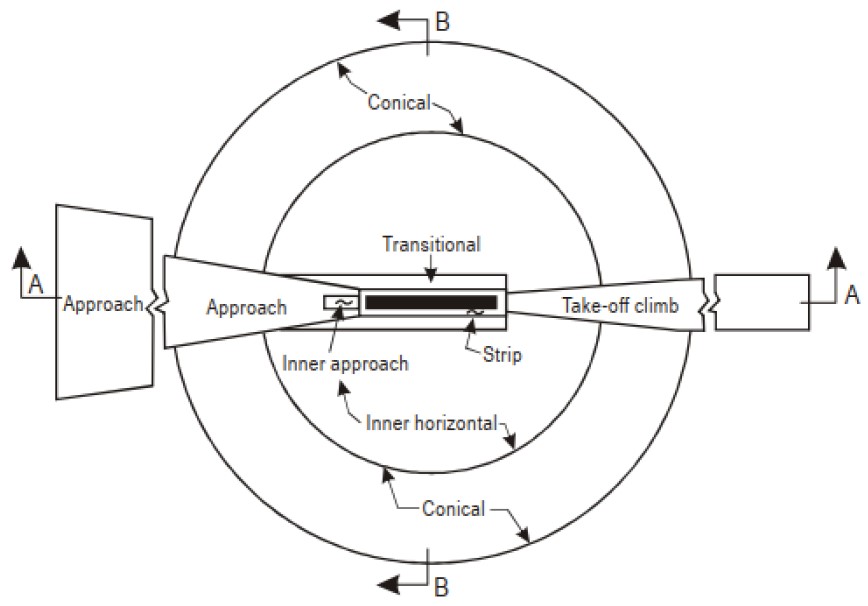
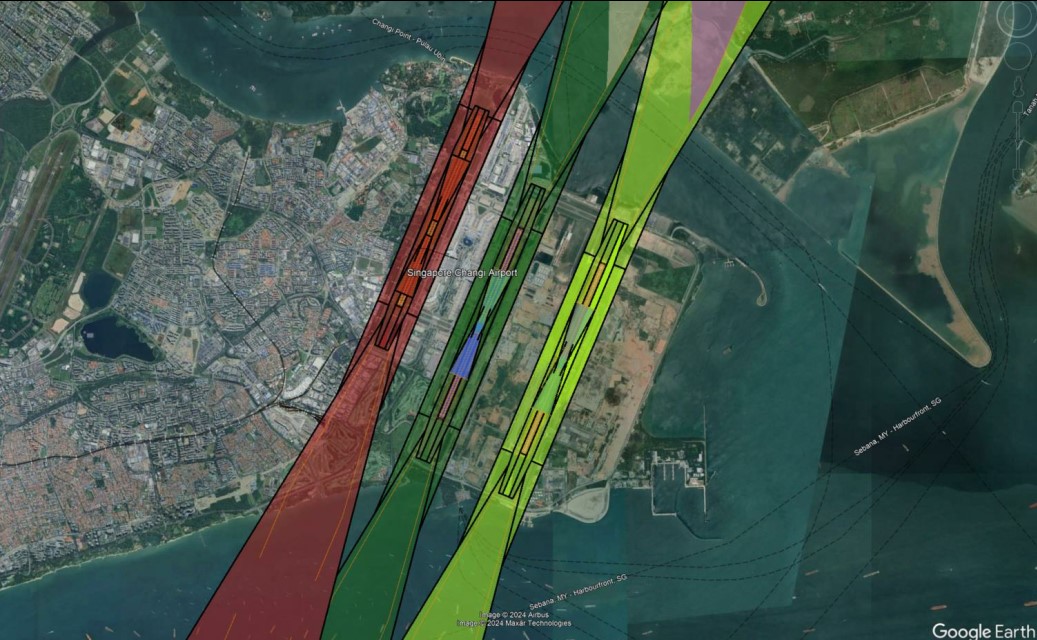
OLS exists to safeguard aircraft from obstacles in the vicinity of airports. The OLS illustration in ICAO Annex 14, Figure 1 (left), is generic, and the actual OLS differs between airports. Without prior aviation knowledge, developers may not be able to understand how the different OLS may affect their development and vice versa. This is where we step in to ensure that there are no lapses in safety precautions by assisting with the translation of the ICAO requirements into 3-D surfaces for developers to interact with. For example, I used Python in a previous project to generate the OLS for Singapore Changi Airport on Google Earth, Figure 1 (right). By using Google Earth, a free open-source platform, developers are now able to interact with the various surfaces via a user-friendly interface. Since the OLS is overlayed onto a base map, developers can easily identify the location of the development with respect to the OLS to assess the impact on aviation and vice versa.


Figure 1: ICAO OLS illustration [2] (left) vs Python generated OLS on Google Earth (right)

Line-of-Sight (LOS) Impact Study

LOS is the most important factor for ATCs to ensure safe and expeditious traffic management within the airport. It is crucial that these developments do not interfere with the ATCs’ LOS within their Area of Responsibility (AoR). Drawing inspiration from architects, we can use Building Information Management (BIM) software to create a digital twin of the development within the airport, Figure 2. This allows us to accurately assess the LOS impact and create amazing visuals to justify our findings to stakeholders, increasing the chances of acceptance.

To wrap up

In conclusion, 3-D visualization software is a good tool to help aviation and non-aviation stakeholders have a better appreciation of the risks due to developments within or in the vicinity of the airport. They allow us to combine both ICAO requirements and development plans on a common platform to perform better aviation risk assessments through a digital twin concept. As the aviation industry becomes more digitalized, it will be interesting to see more such use cases to better educate the industry about aviation risks and requirements.


[1] https://skybrary.aero/articles/standards-and-recommended-practices-sarps

[2] ICAO Annex 14 Volume 1: Aerodromes


Ream more Articles and News

Posted inCapacity, Environment, Strategy

Beyond the Runway – Navigating Airport Master Planning 

Successful airport development extends beyond infrastructure construction; it involves fostering connectivity and prosperity both in the skies and on the ground. This core principle underscores the substantial impact of strategic, long-term planning on airport and aviation infrastructure. Master planning serves as the foundation of this process, shaping airports to be flexible, resilient, and sustainable entities for the future. 

Within this context, the airport represents a highly complex system where its capacity and adaptation to demand growth must be planned with long-term perspectives, focusing on the Quality of capacity. Masterplans should be capable of enhancing the functionality levels of the airport and the services provided to passengers. Simultaneously, they should adhere to the ecological and environmental requirements of the surrounding area. That’s why To70 aims to address the broader question of how to enhance the Quality of the offered capacity, making it sustainable, more modular, and resilient to sudden changes.

Recent data from the International Civil Aviation Organization (ICAO) indicates a rapid expansion in air travel, reflecting increased flights and passengers worldwide. Despite challenges such as those posed by the Covid-19 pandemic and growing environmental concerns, demand for air travel remains strong. This underscores the importance of airports enhancing their quality of capacity to accommodate rising passenger numbers sustainably. It’s crucial for airports to adjust master plans accordingly, ensuring they can effectively manage increased volumes while prioritizing environmental, social, and economic sustainability.

What is Airport Master Planning?

Airport master planning, as described by the International Civil Aviation Organization (ICAO), involves the systematic and strategic process of analyzing current and future aviation demand, identifying infrastructure requirements, considering environmental and safety factors, and establishing long-term development strategies to guide the growth and development of an airport. This comprehensive approach encompasses key elements such as:- runways, – taxiways, – cargo facilities, – terminal buildings, – car parking areas, – aprons, – hangars, – fuel depots, – control tower and other essential infrastructure. At To70, we believe that a successful airport master plan should prioritize enhancing passenger experience, optimizing operational efficiency, and accommodating Growth in a flexible, resilient and Sustainable way.

Let’s now explore in detail each of these crucial elements that constitute a successful airport master plan.

A. Enhancing passenger experience

Developing an airport that prioritizes the passenger experience is crucial for effective airport master planning. It involves formulating a strategy rooted in a deep comprehension of customer desires, of passenger preferences to develop and refine profiles, and delving into their behaviors and patterns to create a highly personalized experience. The integration of technology plays a pivotal role in elevating operational efficiency, optimizing the passenger journey, and minimizing the necessity for additional infrastructure, enhancing the level of service across all subprocesses and guaranteeing a seamless journey.

B. Efficient operations

Strategic and efficient airport management guarantees flawless transitions and optimal performance at each phase. Meticulously planned infrastructure, including runways, taxiways, and aprons, not only streamlines aircraft movements but also minimizes taxi times, elevating overall operational efficiency. Crucial to meeting both current and future demands, resource optimization and capacity planning are prioritized, featuring flexible layouts adaptable to diverse aircraft sizes. Resilience is inherent, with contingency plans and backup systems in place, ensuring uninterrupted operations even in the face of unexpected disruptions. Similarly, the landside infrastructure adheres to this concept to amplify the passenger experience as previously outlined.
C. Accommodating Growth in a flexible, resilient, and Sustainable way

To envision a dynamic airport landscape teeming with activity, it is essential to devise a masterplan that can adapt flexibly to rapid aviation growth while remaining resilient to downsizing due to disruptions and climate risks. This demands meticulous foresight and strategic planning, starting with an analysis of current and projected air travel demands against existing infrastructure capacity. Comprehensive demand forecasting scrutinizes historical data to discern emerging trends. Infrastructure planning orchestrates phased expansion strategies to optimize airport capacity and operational efficiency, emphasizing flexibility and modularity in design for seamless adaptation over time. Terminal layouts and gate configurations are engineered for versatility, while runway and taxiway designs ensure scalability to manage heightened air traffic with minimal environmental impact and cost. All of this is carried out with a keen focus on the quality of capacity, ensuring that the airport grows sustainably over time.

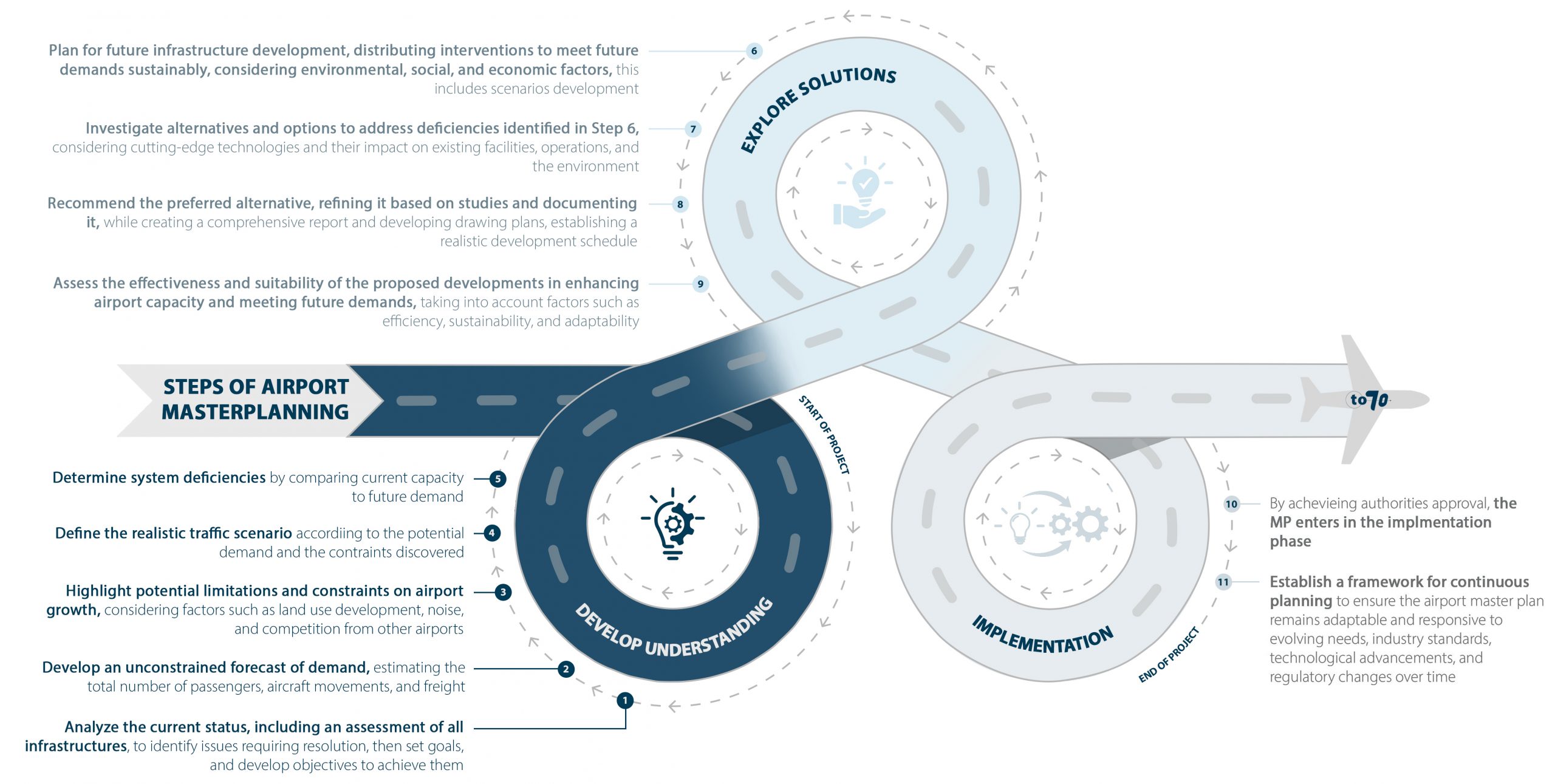
Steps for an Airport Master Planning 

Airport master planning is a comprehensive process that guides the growth and development of an airport, ensuring its long-term sustainability and effectiveness. At To70 airport master planning process is divided into three distinct phases: developing understanding, exploring solutions, and implementation. Within each phase, thorough analysis, collaborative project meetings, and the creation of essential work products by the project team are crucial. Moreover, a critical aspect of each phase is the incorporation of feedback loops, allowing for adjustments and refinements to the work based on stakeholder input and changing circumstances. 


Read more Articles and News

Posted inEnvironment, Strategy, Sustainability & Innovation

Airports as Catalysts: Driving SAF Adoption Through Incentive Funds 

In an era marked by global efforts to combat climate change, the aviation industry faces growing scrutiny. Forecasts predict a substantial increase in passenger air travel in the coming years, amplifying concerns over the industry’s carbon emissions and underscoring the need for immediate action. This is where Sustainable Aviation Fuel (SAF) emerges as a groundbreaking solution to mitigate carbon emissions in aviation. Given that SAF can substantially reduce carbon emissions by up to 80% throughout its lifecycle compared to traditional jet fuel[1], airport incentives are needed to drive the production and adaption of SAF. 

Airports, acting as critical hubs within the aviation ecosystem, have a pivotal role in facilitating the availability and uptake of SAF. One powerful mechanism adopted by several airports is the SAF Incentive Fund, a strategic initiative designed to bridge the price gap between SAF and traditional jet fuel for airlines. The comprehensive details of the SAF Incentive Fund are outlined in the SAF Catalogue, a collaborative effort led by Stargate, To70, the University of Hasselt, and supported by Brussels Airport Company. 

How the SAF Incentive Fund works 

The SAF Incentive Fund is typically set up by the airport authority, often in collaboration with industry partners or stakeholders. The specific subsidy amount is determined based on various factors, including the type of SAF (e.g., biofuels or synthetic e-fuels), the current market price of SAF, and the fund’s available resources. 

Airlines that choose to refuel with SAF at the airport can apply for subsidies from the SAF Incentive Fund. This application process typically involves providing details about the SAF purchase, including the quantity, type of SAF, and associated costs. 

Once the application is approved and the subsidy amount is determined, the airport disburses the subsidy to the airline. This can be done in various ways, such as providing a fixed amount or a percentage of the price difference between SAF and traditional jet fuel. 

By doing so, the financial assistance effectively reduces the net cost of SAF for the airline, making it more economically viable compared to traditional jet fuel. 

Leading Airports in Establishing SAF Incentive Programs 

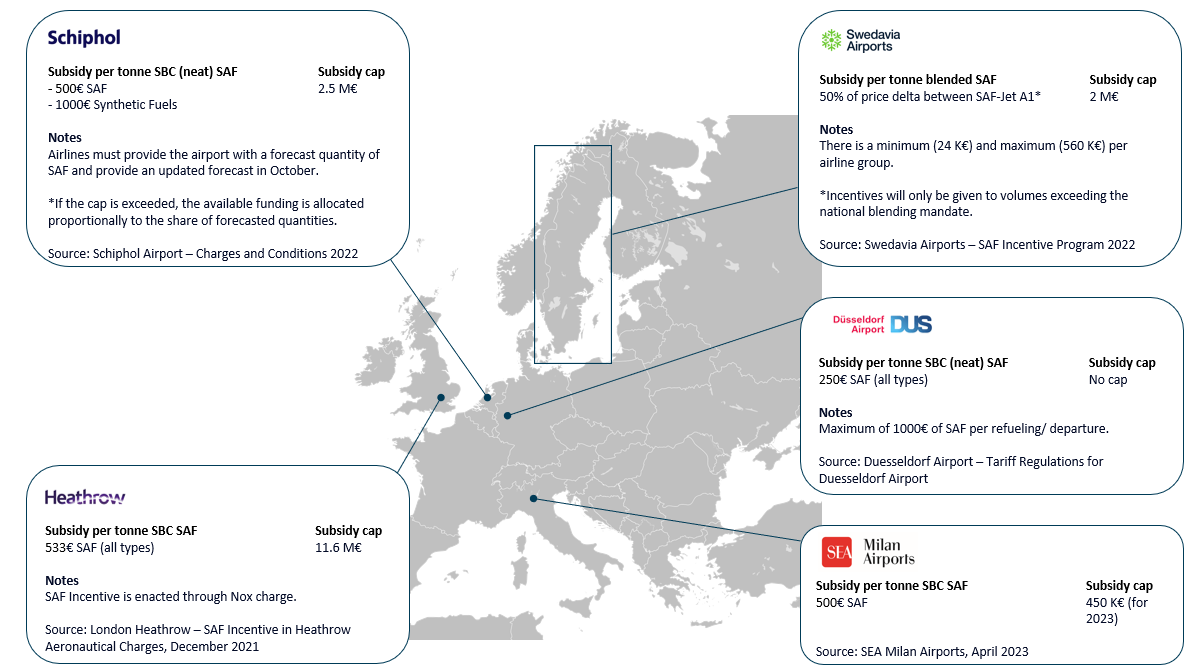
Several leading airports like Schiphol, Swedavia, Heathrow, Dusseldorf, and Milan have already taken action by establishing SAF Incentive Funds to accelerate the aviation industry’s transition to sustainable practices. 

Impact of SAF Adoption at Leading Airports 

In 2022, Heathrow became the first airport globally to launch a SAF Incentive Program that covers up to 50% of the extra cost of SAF, thereby reducing its financial burden on airlines. Heathrow now has set an ambitious objective to triple the percentage of SAF used at the airport in 2023 to approximately 1.5% and become one of the world’s leading airport users of SAF[2]. 

Furthermore, at Schiphol Airport, when airlines refuel with SAF, they receive subsidies of €500 per metric tonne of SAF (biofuels) and €1,000 per metric tonne of e-fuels (synthetic kerosene). To ensure a sufficient supply of SAF, Schiphol supported Neste (their SAF supplier) in acquiring a share of AFS (the fuel distributor at the airport). While Neste’s current production sits at 100,000 tonnes, the company has ambitious plans to scale up output in Rotterdam and Singapore to 1.5 million tonnes[3] 

These examples illustrate how airports can utilize financial incentives to stimulate SAF production. Such actions send a clear market signal about SAF’s crucial role in the long-term decarbonization of aviation. In addition, they encourage investments that can enhance production volumes and subsequently reduce costs.  

Taking Action as an Airport 

The growing number of airports joining SAF Incentive Funds reflects a rising commitment among airports to take a leading role in sustainability. However, many airports often lack clarity on the specific steps required to establish such initiatives. To address this need, we provide guidance on the SAF incentives as described in the Stargate SAF Actions Catalogue to efficiently kickstart a SAF Incentive Program.  

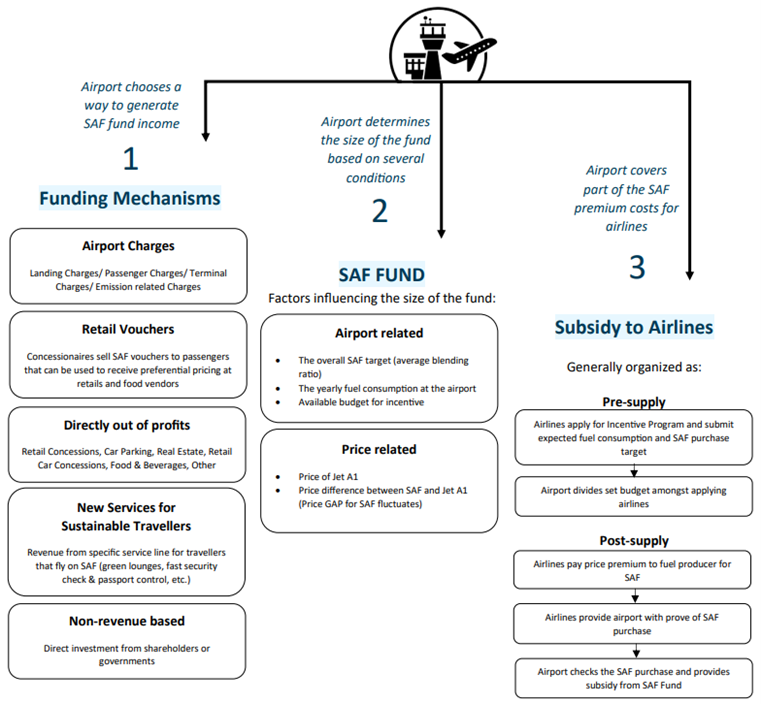
The following figure shows the step-wise approach: 

  1. First, the airport selects a funding mechanism from a variety of choices, as depicted in the first step of the figure, to generate revenue for the SAF fund. 
  2. Next, the airport establishes the conditions for the size of the SAF fund. These may be influenced by airport-specific factors, such as annual fuel consumption, as well as price-related factors like the market price of Jet A1. 
  3. Finally, airlines can apply for the SAF fund, and the airport grants the subsidy by covering a portion of the SAF premium expenses.  

By following these steps, airports can establish a fund to stimulate SAF adoption on their premises. To70 can support airports to apply these steps within their own unique context, – and provide analysis and eventual testing and implementation. By doing so, airports can use their unique infrastructure position and promote sustainable practices among relevant stakeholders. 


[1] Jiang, C., & Yang, H. (2021). Carbon tax or sustainable aviation fuel quota. Energy Economics, 103, 105570. 


Check out our open vacancies around the globe!

Posted inStrategy

Elevating Aviation Consultancy with LuciadLightspeed: A Visual Perspective

Data visualization is a cornerstone of aviation consultancy, playing a critical role in analyzing and presenting complex information. Hexagon LuciadLightspeed, a high-performance 2D and 3D geospatial visualization platform, has transformed the way To70 is able to analyze and communicate data to unlock valuable insights and provide impactful recommendations. In this article, we will explore how developing LuciadLightspeed enhances our consultancy services through its powerful features, which enable top-level analysis and effective communication.

Developing LuciadLightspeed for Aviation Consultancy

LuciadLightspeed is a cutting-edge visualization platform designed to fuse, visualize, and analyze geospatial data. Despite its many built-in capabilities, its key added value is the possibility to expand the existing framework with custom software, thus allowing our consultants to create ad-hoc solutions for specific problems or client requests. In this manner, we have successfully developed a series of supplementary capabilities which include the visualization of aircraft, flight paths and their noise footprints that can be replayed in real or fast time. Thus, by developing a specialized tool that surpasses generic solutions, our aviation expertise is leveraged with powerful geospatial visualization technology, a synergy enabling us to provide superior consultancy services.

Modernizing community engagement

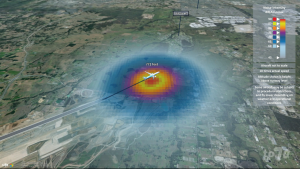
To70 has developed LuciadLightspeed to change the way in which our consultants can represent flight data. Aircraft tracks could always be shown with the underlying topography by means of 2D plots. With LuciadLightspeed, we can now use the third dimension to gain a better understanding of how different flight paths relate to one another and the surrounding landscape, with the added immersion of moving around a 3D world integrating the terrain along the Earth’s surface. Furthermore, we can now assign custom aircraft models to these paths, and thus represent different aircraft types, sizes and liveries, and replay them over the flight path for visualization purposes. Lastly, we have developed the capability to visualize the flight’s noise footprint, thus showing how noise evolves through the trajectory in real or fast time. This representation of the noise generated by an aircraft, when shown over time and together with the aircraft model in 3D space, proves to be much more understandable and appealing to the public than the usual noise contour. With these components, the custom version of LuciadLightspeed developed by To70 can provide a more visual perspective to environmental impact assessments, thus bridging the gap between aviation growth and community engagement. Examples of such videos have already been published as part of the noise tool for Western Sydney International developed in collaboration with Aerlabs: Western Sydney International (Nancy-Bird Walton) Airport Aircraft Overflight Noise Tool.
Watch more on our Vimeo channel.

Expanding capabilities

Nonetheless, the potential capabilities that LuciadLightspeed has for us do not end there. These capabilities can be used to either aid ourselves in our work or as a service to the client. On the one hand, at To70 we combine our aviation expertise with real world data to gain insights into the operation and propose solutions to the client. The handling and presentation of this data becomes paramount to the subsequent analysis and understanding of the problem, for which LuciadLightspeed can greatly enhance our methods. We can now  visualize and analyze a wealth of data from various external sources, thus seamlessly integrating radar and ADS-B feeds, weather data, airport databases, and many more, allowing us to tap into a vast array of information that is crucial for gaining insights and making informed recommendations to the client. On the other hand, LuciadLightspeed can also be used for a more effective collaboration and communication with the client or for their purposes, such as for example community engagement projects.  With its advanced visualization capabilities, we can now convey complex concepts and insights in a clear and compelling manner. The platform allows us to transform data into visually impactful presentations to facilitate data-driven discussions, engage stakeholders and foster a deeper understanding of the information being shared, thus gaining new perspectives to make informed decisions. This enhanced communication helps bridge the gap between technical analysis and non-technical stakeholders, promoting transparency and facilitating meaningful dialogue.

To wrap it up

In conclusion, developing this framework can prove to be a game-changer in the way data is visualized, decisions are made and communication takes place. By leveraging LuciadLightspeed’s advanced visualization capabilities with our aviation expertise, we can unlock valuable insights leading to enhanced analysis and informed decision-making. Furthermore, it facilitates clear and compelling communication, enabling us to present complex concepts in a visually engaging manner to the public, fostering understanding and collaboration among stakeholders. With LuciadLightspeed, To70 can embark on a new era of data-driven insights, impactful recommendations and successful solutions.

Would you like to shape your career path with us? Join our team! There are open vacancies in our different offices around the world, click here to check them out.
Posted inEnvironment, Strategy

Hybrid electric aircraft, a promising technology

“In 2050 technologies and procedures available allow a 75% reduction in CO2 emissions per passenger kilometre to support the ATAG target and a 90% reduction in NOx emissions. The perceived noise emission of flying aircraft is reduced by 65%.”. This is what is stated in the EU’s vision for aviation Flightpath 2050[1]. To achieve this goal, the aviation sector is developing many new technologies across its whole value chain. Along with SAF and hydrogen propulsion, focus is being put in the development of fully electric aircraft. However, such technology poses major technical challenges due to the energy to weight and power to weight ratio of current battery technology. Hence, Hybrid Electric Propulsion System (HEPS) poses itself as a promising solution.

What is hybrid propulsion?

Hybrid electric propulsion, in the most general sense, combines an electric motor with an Internal Combustion Engine (ICE), or in more general sense a second power source, in a similar fashion to what is seen in current hybrid electric cars. In almost all designs the electric motor drives a propeller (the propulsor).  For this reason, HEPS is being developed for either General Aviation (GA) aircraft or regional turboprops. The Internal Combustion Engine could also be substituted by a gas generator, or even by fuel cells [2]. The electrical energy to the motor can be provided either by a battery pack, or from an electrical generator. The latter converts the energy coming from the second power source into electrical energy.

When it comes to the powertrain design, three major architectures have emerged:

  • Series HEPS architecture,
  • Parallel HEPS architecture, and
  • Series-parallel HEPS architecture.

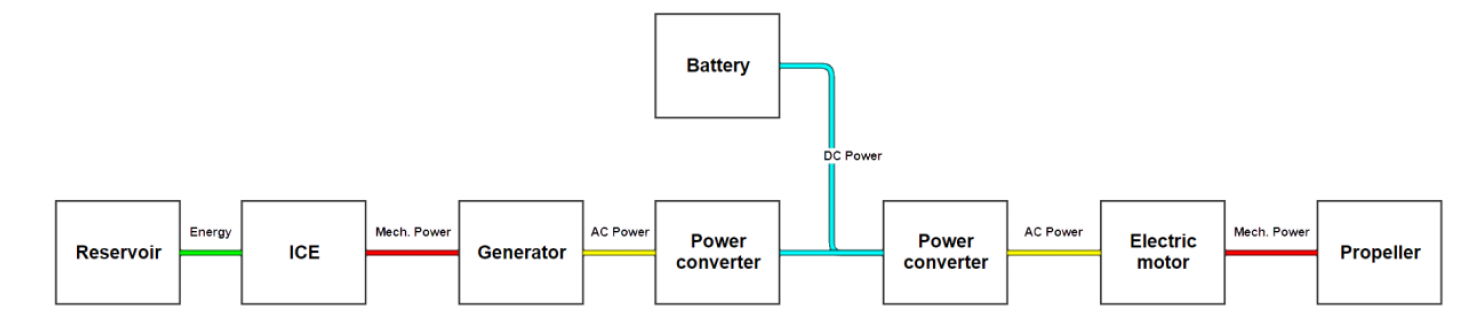
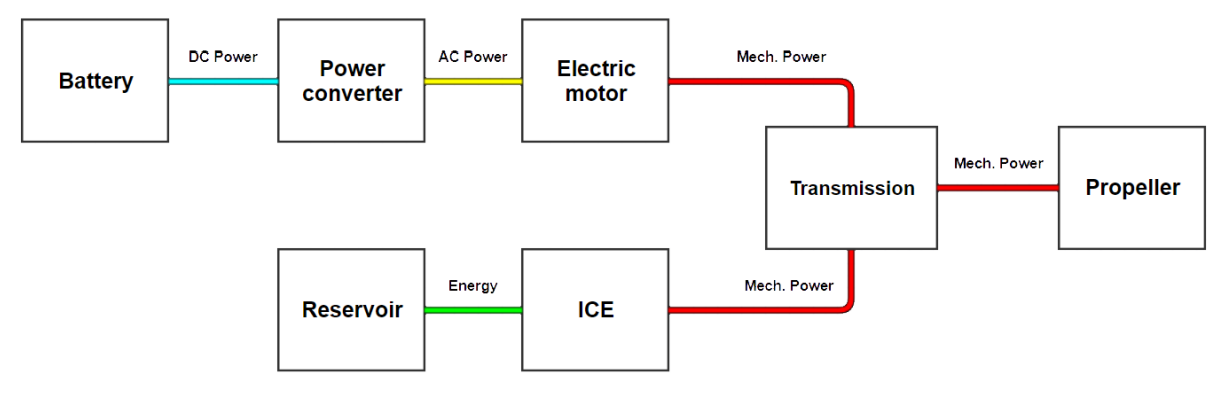
In the series configuration, the propeller is only driven by the electric motor. The (electrical) power to drive the motor is provided either by the battery and/or an electric generator coupled to the ICE.

Schematics of a series HEPS architecture (source: [2])

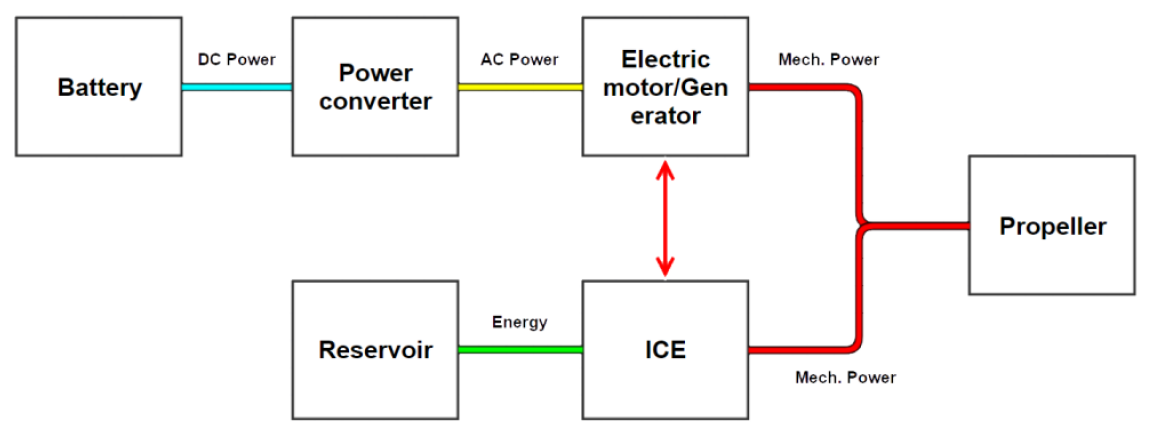
In the parallel architecture, mechanical power is provided both by an electric motor, powered by batteries, and by the ICE. The transmission couples both input mechanical power sources into a single output shaft to the propeller.

Schematics of a parallel HEPS architecture (source: [2])

The series-parallel architecture, as the name suggests, combines the series architecture with the parallel one, and many different specific configurations have been developed. Although such configuration can be regarded as being the most advanced hybrid architecture, giving great flexibility in the design, it is also the most complex and heavy of the three.

Schematics of a possible configuration for series-parallel HEPS architecture (source: [2])

Benefits and drawbacks of hybrid electric propulsion

Hybrid electric propulsion shows promising advantages. In the series architecture, if the batteries have enough energy and power density, the aircraft could operate in fully electric mode. With current and projected battery technology, this could be achieved during the less power intensive phases of flight, such as descend and landing. For the latter, however, the full power needs in case of a take-off or go-around need to be carefully examined during the design of the powerplant. Furthermore, electrical energy is produced during the flight and can be stored in the batteries, allowing for an extended range and/or for fully electric operations for the final stages of the flight. Finally, from a safety perspective, having two separate power sources provides redundancy in the powertrain system, increasing the safety of such configuration.

Moreover, the series architecture is relatively simple: the propeller is only driven by one power source (the electric motor), hence eliminating the need of having complex and heavy gearboxes. Furthermore, the ICE can run at constant, optimal RPM, increasing its efficiency and hence requiring lower fuel burn. However, energy will be lost in the conversion phases (from mechanical to electrical, and from electrical to mechanical), even though electric generators and motors efficiency are quite high (in the order of around 90%) [3]. The need of a generator, which adds weight to the powertrain, is one of the major drawbacks of such design.

For the parallel architecture, the main advantage is that there is no need for an electrical generator; furthermore, the electric motor can be smaller, and hence lighter. However, such weight advantages are counteracted by the added complexity and associated mass of the gearbox, which has to combine two mechanical power inputs (electric motor and ICE) into one output shaft to the propeller.

A drawback that is common for all the HEPS design is that there is still the need for conventional fuel to power the aircraft, even if fuel consumption is lower compared to traditional aircraft. However, as for conventional aircraft, SAF could be used for HEPS powertrains as well.

The benefit of the potential reduction of the noise imprint of the aircraft deserves and article by itself, given the complexity of the topic. Research work is being done in this field. [4] focusses on the noise analysis for GA hybrid electric aircraft and concludes that a reduction of approximately 3 dB could be achieved when flying fully electric in the departure and climb phases of an airport traffic circuit. On the other hand, [5] compares the noise impact of a traditional ATR42 against a modified, hybrid version, concluding that the hybrid configuration could have a higher noise impact on the ground, both in terms of LAE and LDEN. Hence, definitive noise evaluations on hybrid electric propulsion cannot yet be drawn.

Overview of the current HEPS aircraft

In recent years, many aircraft testbeds have been developed to investigate hybrid electric propulsion.

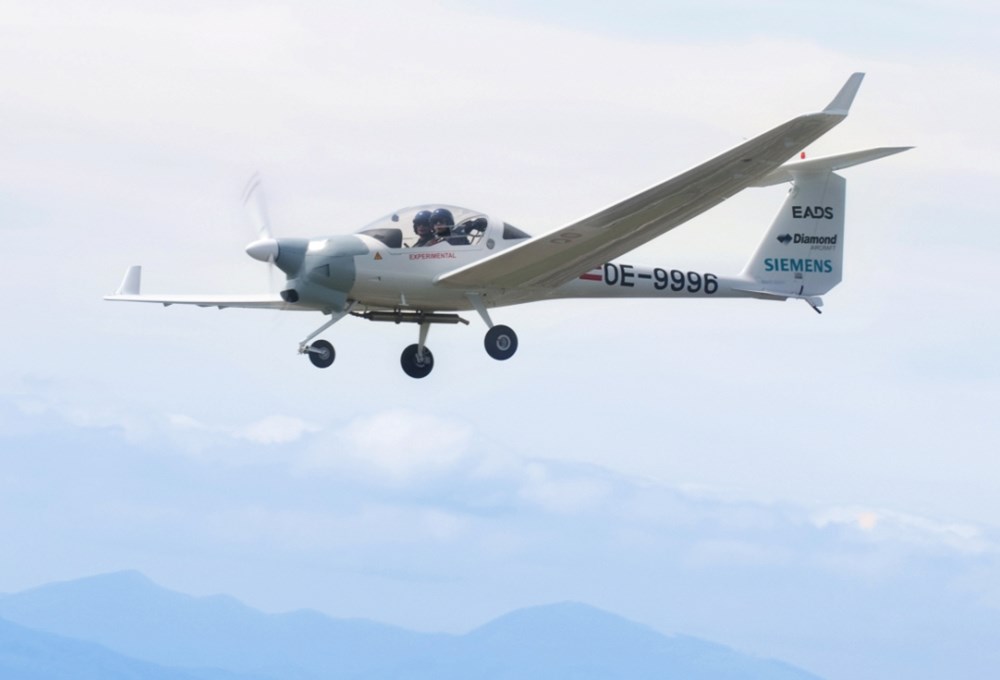
Diamond DA36 E-Star, featuring a series hybrid electric powertrain (Image source: [8]).

Starting with General Aviation, a consortium comprised of Siemens, EADS and Diamond Aircraft developed in 2011 the Diamond DA36 E-Star (and later in 2013 version 2) as one of the first hybrid electric aircraft suitable for commercial use. The aircraft features a series architecture, where the propeller is run by a 70 kW (94 hp) electric motor and electrical energy is provided by 30 kW (40 hp) reciprocating engine, coupled with a generator and battery packs. The company claims that this aircraft achieves a 25% reduction in fuel consumption and a drastic reduction in noise emissions during take-off [6]. Moreover, in 2018, the company announced the first flight of the world’s first multi-engine hybrid electric aircraft, based on the DA40 aircraft [7].

Within the EU funded HYPSTAIR (Hybrid Propulsion System for General Aviation Airplanes) project, a 200 kW serial HEPS has been developed and ground tested.

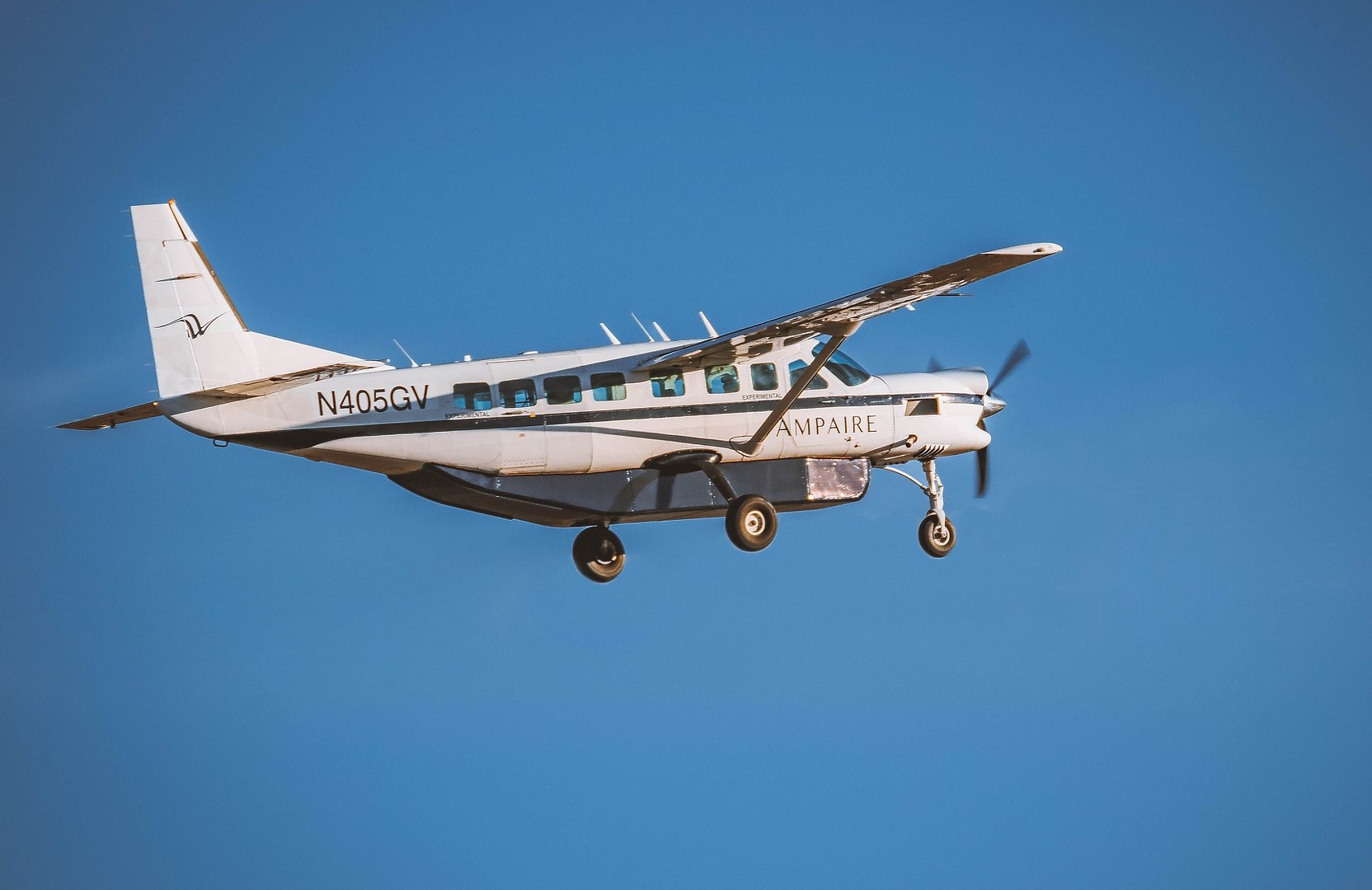
American based Ampaire is developing and testing different GA concepts. An hybrid electric retrofit of a Cessna 337 Skymaster is mainly being used as a tesbed aircraft for components, according to the company’s website. The manufacturer is also developing a modified Cessna 208B Grand Caravan, claiming that its emissions are the lowest in its class, with fuel savings between 50% and 70% [9].

Ampaire’s Cessna 208B Grand Caravan, retrofitted with an hybrid electric powertrain (Image source: [9]).

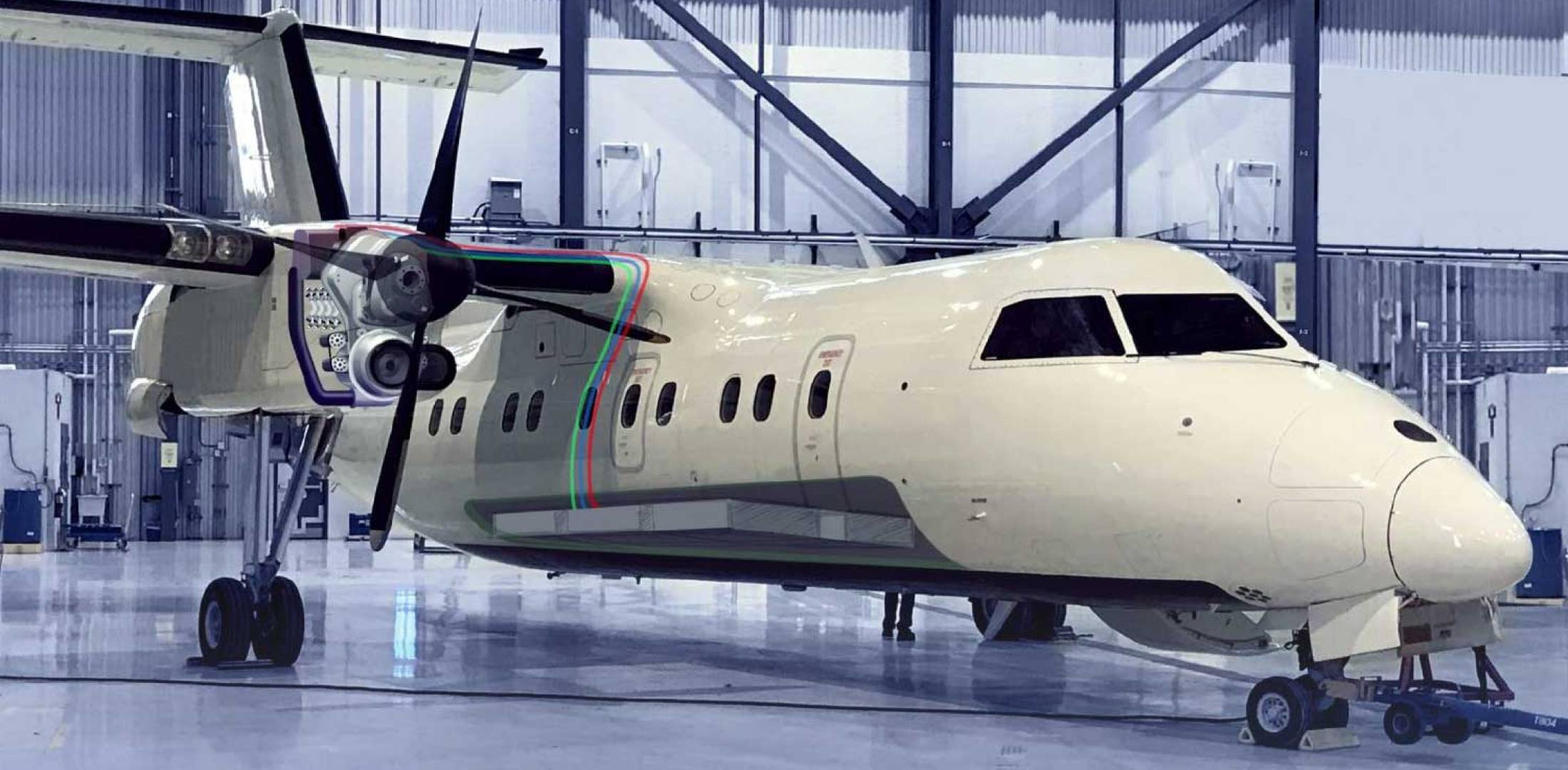
Demonstrators for regional propeller aircraft are also being developed. United Technologies (now part of Raytheon Technologies) is developing a hybrid electric testbed based on the Dash 8-100 twin turboprop. The aircraft is equipped with a parallel hybrid configuration on one of the two engines, with a 1 MW electric motor and an equally powerful 1 MW turboprop engine.

United Technologies hybrid-electric testbed: a retrofitted Bombardier Dash 8-100. Only one of the two turboprop engines is substituted with a parallel hybrid electric propulsor (Image source: [10])

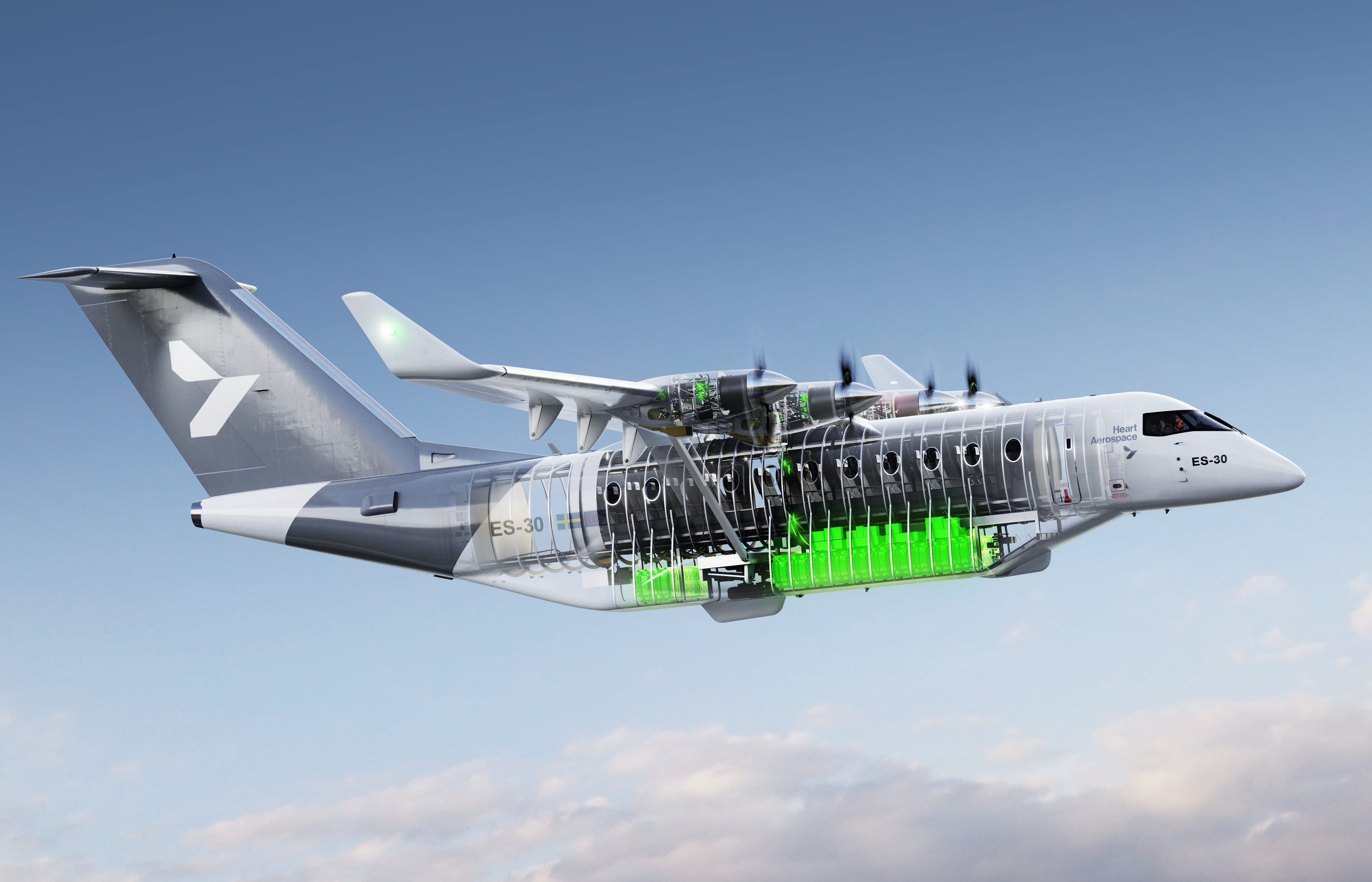
Swedish startup Heart Aerospace is developing a 30-seater hybrid electric aircraft. The company claims performance figures of 800 km of range in hybrid electric mode and a payload of 25 passengers, with an estimated EIS by 2028. [11]

Heart Aerospace ES-30, a 30 seater hybrid electric aircraft (Image source: [12]).

To wrap it up

Hybrid electric propulsion poses itself as interesting technology in the support for the decarbonization of the aviation sector. The presence of a conventional engine (either reciprocating or gas generator) allows for greater ranges and payloads compared to fully electric aircraft, whilst still promising lower fuel burns and emissions. The propulsive architecture allows for great design flexibility, which allows to explore different aircraft concepts. Many companies have started to experiment with such technology, which shows encouraging interest with regards to hybrid electric propulsion in the aviation sector.


[1] European Commission, Directorate-General for Mobility and Transport, Directorate-General for Research and Innovation, Flightpath 2050 : Europe’s vision for aviation : maintaining global leadership and serving society’s needs, Publications Office, 2011, https://data.europa.eu/doi/10.2777/50266

[2] F. Gaspari et al. “D1.1: Concept of Modular Architecture for Hybrid Electric Propulsion of Aircraft”. In: Deliverable D1.1 of the MAHEPA Consortium (2017).

[3] C. E.D. Riboldi, “An optimal approach to the preliminary design of small hybrid-electric aircraft”, Aerospace Science and Technology (2018)

[4] C.E.D. Riboldi et al, “Predicting the effect of electric and hybrid-electric aviation on acoustic pollution”, Noise Mapping (2020)

[5] A. Sollazzo et al, “Acoustic Impact of Hybrid-Electric DEP Aircraft Configuration at Airport Level”. Applied Sciences (2021)

[6] https://www.diamondaircraft.com/en/about-diamond/newsroom/news/article/diamond-aircraft-eads-and-siemens-enter-long-term-research-partnership-on-electric-propulsion-syste/

[7] https://www.diamondaircraft.com/en/about-diamond/newsroom/news/article/diamond-aircraft-1st-flight-multi-engine-hybrid-electric-aircraft/

[8] https://www.skybrary.aero/aircraft/da36

[9] https://www.ampaire.com/vehicles/eco-caravan

[10] https://www.ainonline.com/aviation-news/aerospace/2019-03-26/utc-reveals-hybrid-electric-aircraft-demonstrator

[11] https://heartaerospace.com/es-30/

[12] https://heartaerospace.com/media-bank/