Flight path to equality: The importance of Women in Aviation Networks
Aviation has always been a field driven by innovation, technology, and exploration. It has long been perceived as a male-dominated field, but the contributions of women have been significant and transformative. From the early pioneers who defied societal norms to modern-day leaders who continue to break barriers, their journeys illustrate not only the evolution of aviation but also the fight for equality and recognition within a traditionally male-dominated field.
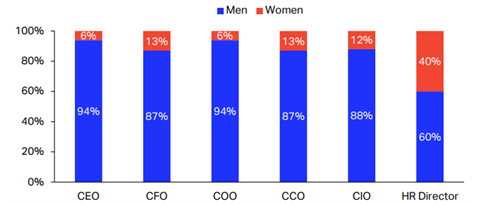
According to the International Civil Aviation Organization (ICAO), women represent approximately 4.9% of pilots, air traffic controllers, and maintenance technicians worldwide in 2021. IATA reports that only 6% of airline CEOs are women, which grew three percent from 2019 to 2021. A 2020 Australian-based study from the federal Workplace Gender Equality Agency highlighted the connection between increasing women in key management roles and the company’s market value; for a 10% increase in key management personnel led to a 6.6% increase in market value. These figures are a clear indicator of progress and the benefit of women in the workforce, but also highlights how underrepresented women remain.
This article delves into the legacies of those who paved the way, highlights the importance of women’s conferences and groups, and explores the future landscape of women in aviation.
Women that paved the way
The history of women in aviation is rich with remarkable individuals who challenged the status quo. Amelia Earhart, became the first woman to fly solo across the Atlantic, inspiring generations of women to take to the skies. Nancy Bird Walton made history as the first and youngest woman in Australia to earn a licence to carry passengers. She went on to found the Australian Women Pilots’ Association, championing women’s advancement in aviation. Deborah Lawrie made her own historic mark as the first woman to work as a commercial pilot, opening the door for countless other women to follow in her footsteps.
Today, women are playing a pivotal role in the leadership of some of the world’s most influential airlines and airports, continuing the legacy of those who paved the way before them. Female CEOs such as Marjan Rintel (KLM) and Vanessa Hudson (Qantas), have shattered the glass ceiling. Angela Gittens is a world leader in airport management having been the CEO of Miami and Atlanta Airport and the Director General of ACI World and Yvonne Makolo (CEO of RwandaAir) is the first female Chairperson of the International Air Transport Association. In the airport sector, Lorie Argus (Melbourne and Launceston Airports) and Amelia Evans (Queensland Airports) are making their mark on the Australian aviation landscape. Newcastle Airport Board is 60% female with Jude Munro AO, Samantha Martin, Lee de Winton, Leah Anderson and Katie Cooper all applying their experience to ensure the success of the airport. These pioneers not only achieved remarkable feats but also laid the groundwork for future generations of female aviators and leaders in aviation.
Why are women conferences and group so important?
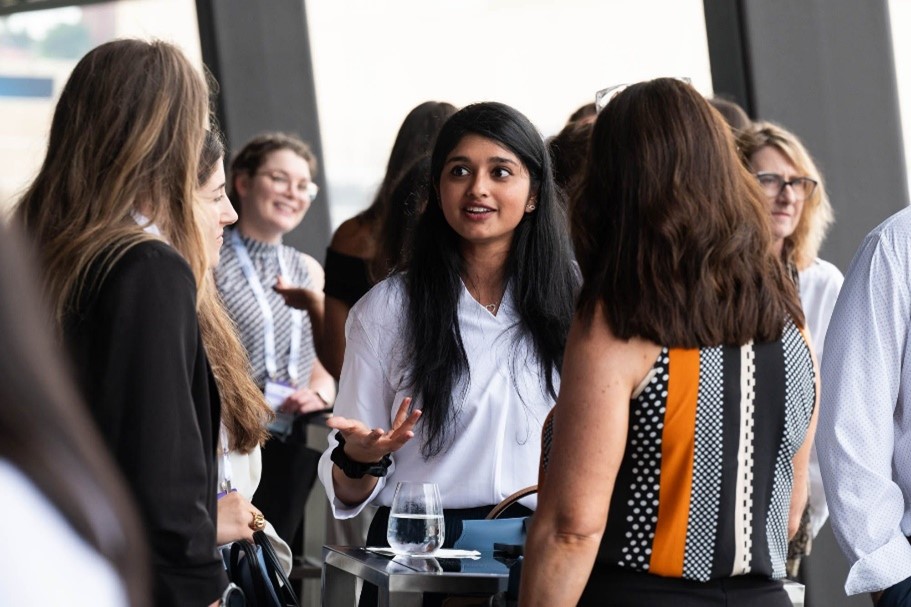
Women-focused conferences and organisations are vital in fostering a supportive environment for women in aviation. These gatherings such as AAA Women in Airports Forum 2024 and events organised by groups such as Women in Aviation/Aerospace Australia and Women in Aviation Australian Chapter offer attendees the opportunity to connect with industry leaders, gain insights into career advancement, and find inspiration from others who have faced similar challenges. We attended the AAA Women in Airports 2024 on the 18th of November last year and enjoyed meeting all the wonderful attendees.
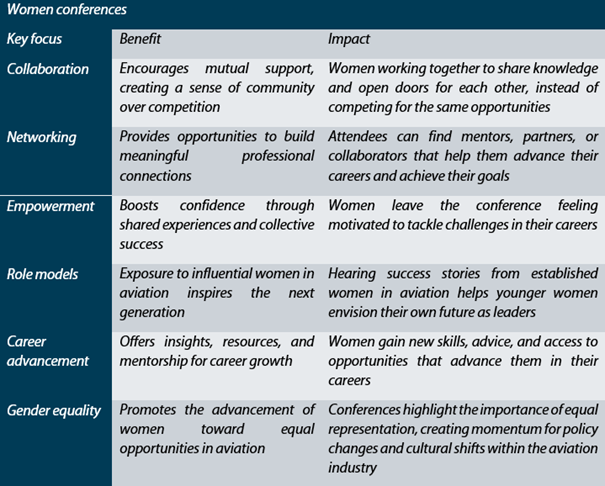
Participating in women conferences offers numerous advantages for personal and professional growth. The table below outlines some of the key benefits these events provide, from enhancing career opportunities to fostering a supportive network.
Equally important is the involvement of men in these events. Men attending women’s conferences, like our colleague Trent Kneebush, who attended the Women in Airports forum 2024, have the opportunity to hear firsthand the challenges women face. This fosters empathy, awareness, and a shared commitment to gender equality. When men actively listen to these conversations, they can become allies that actively break down systemic barriers. At To70, we believe this collaborative approach ensures that diversity and inclusion efforts are shared by everyone, not just women.
The importance of women’s conferences and groups cannot be overstated—they are a catalyst for change, growth, and empowerment for all women.
Where do we see this going?
As we look ahead, the role of women in aviation continues to evolve and expand. Initiatives to promote diversity and inclusion are gaining momentum, with organisations like Women in Aviation/Aerospace Australia or Women in Aviation International working tirelessly to inspire and support women in the industry. These groups offer mentorship programs and networking opportunities to encourage young women to pursue careers in aviation and aerospace.
To70 has recognised the importance of female leadership with Araya Sakburanapech, Wenjing Zhou and Ella Soltani leading the To70 Thailand, China and Belgium offices respectively. We are proud to have a workforce that is 32% female, and the company is working with the women within to ensure they feel supported, respected, and empowered to succeed at all levels.
The airline industry’s regulatory body – International Air Transport Association (IATA) is the second organisation that has taken initiatives to set a milestone to eliminate the gender pay gap in the aviation industry by obtaining the global EQUAL-SALARY certification covering all its employees throughout the world.
Challenges remain, of course. Gender bias and stereotypes still exist, and the aviation community needs to continue to work toward fostering an inclusive environment. Advocacy for policies that support work-life balance, equal pay, and professional development will be crucial in ensuring that women can thrive in the industry.
Wrap up
The aviation industry is at a pivotal moment, with increasing opportunities for growth and inclusion. Conferences and organisations dedicated to women in aviation play a key role in fostering connections and empowering careers. By promoting diversity and inclusivity, we can ensure women continue to shape the industry’s future and drive its progress.
References
- Australian Aviation. (2022). 5 pioneering women in Australian Aviation. 5 pioneering women in Australian aviation – Australian Aviation
- Cassells, R. & Duncan, A. (2020). Gender Equity Insights 2020: Delivering the Business Outcomes, BCEC|WGEA Gender Equity Series, Issue #5, March 2020. Gender Equity Insights 2020: Delivering the Business Outcomes
- International Civil Aviation Organization. (2023). Gender Equality and Way Forward. Microsoft PowerPoint – NACCDCA11P07.pptx
- International Air Transport Association. (2022). Equal-Salary Certification: IATA OBTAINS THE EQUAL-SALARY CERTIFICATION GLOBALLY. https://www.iata.org/en/careers/equal-salary-certification/
- International Air Transport Association Economics. (2022). IATA Economics’ Chart of the Week: Women are still under-represented in leading positions at airlines. IATA Economics’ Chart of the Week: Women are still under-represented in leading positions at airlines
- Melbourne Airport. (2024). Melbourne Airport announces new CEO. Melbourne Airport announces new CEO | Melbourne Airport
- National Women’s History Museum. (2015). Amelia Earhart. Amelia Earhart | National Women’s History Museum
- Newcastle Airport (2024). Board Governance. Newcastle Airport Board Governance
- Qubein, R. (2024). Women in Aviation: The most influential leaders of 2024). https://businesstravelerusa.com/profiles/the-rise-of-women-in-aviation/
- Queensland Airports Limited. (2024). Meet our executive team. Meet Our Executive Team | Queensland Airports Limited
- State Government of Victoria. (2022). Nancy Bird Walton AO OBE. Nancy Bird Walton AO OBE | vic.gov.au

ABOUT THE AUTHOR
Athira is an Aviation Consultant at To70, Melbourne. As a Master of Science (Aviation) graduate from RMIT University, she has a strong academic background in aviation. Athira is part of many Women in Aviation groups and was also part of the mentorship program. Working with To70, she was involved in airport planning, demand and capacity modelling, and slot utilisation. She has also developed analytical expertise in Fast Time Simulation and AEDT noise modelling.

ABOUT THE AUTHOR
Jazmin is an Aviation Consultant and serves as the Victorian Chair of the Women in Aviation Australian Chapter. She holds a Bachelor of Aviation Management and a Certificate IV in Work, Health, and Safety. With a diverse portfolio, Jazmin works on airport infrastructure, Master Planning, and Australian Noise Exposure Forecast (ANEF) projects. She has extensive expertise in AEDT Noise Modelling and Fast-time Simulation, contributing valuable insights and technical skills to complex aviation initiatives.

ABOUT THE AUTHOR
Elvira is a Junior Aviation Consultant at To70 Australia and a member of the Queensland Sub-Committee for Women in Aviation/Aerospace Australia. She earned a PhD in Aviation from Griffith University, where she specialised in pilot training, and a Master of Aviation Management, which provided her with a deep understanding of safety management systems, airport planning, and airline management. Her professional background includes serving as a sessional lecturer at Griffith University and engaging in research projects with Boeing Research and Technology.