Skip to content

Tag Archives: SAF

Posted inEnvironment

Airports at a crossroads to take full advantage of SAF and CSR

An opportunity to support local businesses and local communities

12% of passengers flying out of European airports are business travellers, making 30% of the travel volume across Europe (due to frequent flying)[1]. While flying is a catalyst for successful business, it comes at an environmental cost that corporates and businesses are being increasingly scrutinised for. Yet, the good news is airports have solutions to offer to reduce aviation related emissions while contributing to ongoing cutting-edge research. This blog post specifically explains how airports can explore the potential of Corporate Social Reporting (CSR) and sustainable aviation fuel (SAF) to address the impact of business travel while improving the day-to-day wellbeing of local communities.

RefuelEU & CSR goals – a happy marriage

If you are reading this blog, you have most likely heard about RefuelEU. Therefore, you will know that it mandates the use of SAF across all union airports[2] by January first 2025. As of this date, RefuelEU sets a transitional period, the so-called book and claim period, during which SAF can be bought at one airport while claimed at another one. The transitional period will come to an end on 31st December 2034. Getting SAF at every union airport by this date is a challenge the industry should start thinking about.

Corporate social responsibility (CSR) goals create a momentum to increase SAF availability at airports by advancing Airport – Corporate partnerships.

While only large companies are bound to fully implement ESG goals under the EU CSR Directive (CSRD)[3], all businesses are highly encouraged to commit to CSR goals to showcase the actions taken in this regard; it has even come to be the licence to operate for many. For companies where business travel is a significant part of their emissions, decarbonising corporate travel is critical and SAF is currently the main lever to pull.

Decarbonising corporate travel through local SAF uptake

As a facilitator for air travel, airports can contribute by acting as an intermediary between fuel suppliers and corporates willing to purchase SAF. This solution also directly supports SAF scale up at the airport. Examples of such intermediary actions include:

  • Communicating to corporates about what SAF can achieve (and what it cannot);
  • Raising awareness on the benefits of uptaking SAF, especially locally (e.g. on the airport site).

In practice, airports could also, for instance, set up a blockchain system that allocates a SAF batch purchased by a fuel supplier to corporates willing to mitigate business travel.

By taking such actions, not only will airports reduce their scope 3 emissions, critical in reaching net zero targets, but they can also lead by example, and ensure them and their partners are aligned with the ReFuelEU regulation in time. Global SAF uptake fundamentally contributes to a brighter future in the aviation industry, which may be intrinsically linked to how corporate’s own business may flourish. However, incentivising local SAF uptake goes one step further for local communities and airports to benefit from the full potential of SAF.

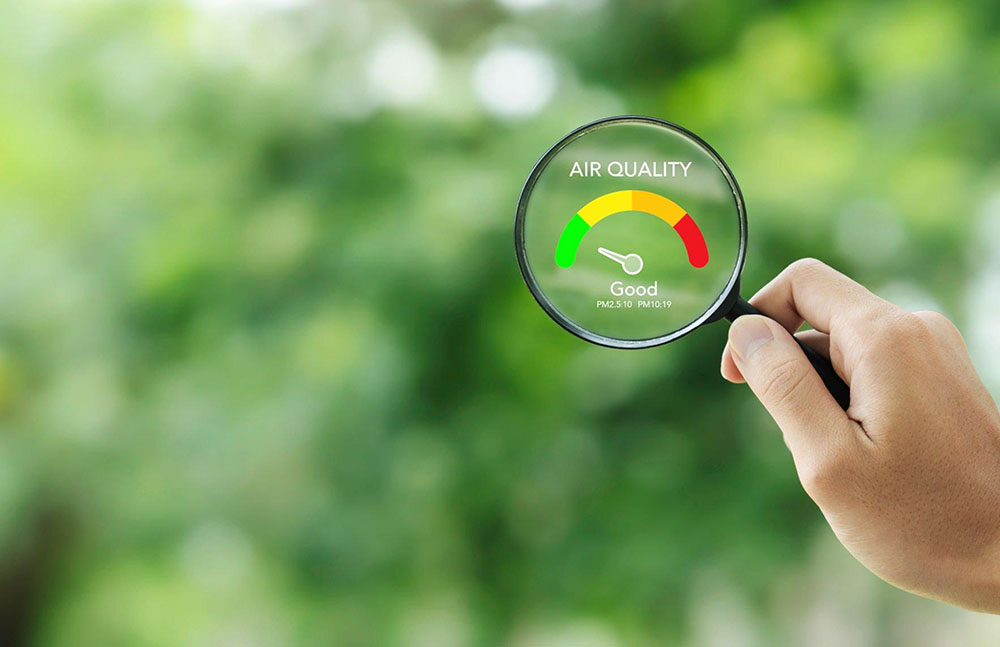
On top of decarbonising the aviation sector, local SAF uptake supports the local supply chain and job creation. Above all, SAF uptake has shown to improve local air quality, though more research is needed[4]. Therefore, by purchasing SAF and uptaking it on the airport site, local businesses not only support local actors but will also have a positive impact on their immediate territory.
Contributing to state-of-the-art research

Increasing research is being performed on how SAF may improve local air quality (e.g. Particulate matters, Sulfur). Studies have recently been conducted on the non-CO2 impact of SAF by the EU Alight project, DLR and To70, among others, which showed promising results[5]­ [6]. One main finding is that high blend ratios are necessary to have a substantial impact on local air quality.

Starting an airport-led SAF purchase can be the opportunity to set-up a partnership with a research institute, specialised in local air quality assessment. Such partnerships could lead to more clarity on local impacts of SAF through tests with different uptake scenarios (10, 15, 20% or more SAF blend) to evaluate the effect on air quality around airports. This also shows the effort of the airport to engage with local communities and improve their everyday well-being, therefore advancing their own CSR goals.

At To70, we are committed to supporting airports in adopting strategies to reduce their environmental footprint and to advance aviation industry-wide climate goals, such as SAF deployment. In this regard, To70 has been actively contributing to SAF deployment within, for instance, the European-funded project Stargate[7] as well.

By applying global knowledge to identify tailored solutions, To70 works relentlessly with its partners to advance future proof solutions for the aviation sector.

Bibliography

[1] Corporate travel | Transport & Environment (transportenvironment.org)

[2] Airports where the yearly passenger traffic is higher than 800.000 passengers or where yearly freight traffic exceeds 100.000t

[3] Publications Office (europa.eu)

[4]How sustainable are SAF? | EASA Eco (europa.eu)

[5] BIOFUEL IMPROVES AIR QUALITY – SAS (sasgroup.net)

[6] RSB and To70 publish case study on the non-CO2 impact of sustainable aviation fuels – RSB

[7] Home — Stargate (greendealstargate.eu)


Read more Articles and News

Posted inEnvironment, Strategy

Thailand’s Sustainable Aviation Fuel Initiative: Establishing a Sustainable Future for Aviation

As the global aviation industry seeks ways to reduce its environmental impact, Sustainable Aviation Fuel (SAF) has emerged as a promising solution. SAF offers a viable path to significantly cut carbon emissions from air travel, thereby contributing to global climate goals. In line with the International Civil Aviation Organization’s (ICAO) policy of achieving net-zero carbon emissions by 2050, Thailand is at the forefront of this green transition. This blog explores the current state, challenges, and the prospects of Thailand’s SAF initiative, highlighting how SAF not only reduces carbon emissions but also benefits other industries.

Current Status and Key Players in SAF Adoption 

In the recent years, Thailand has made tremendous efforts in adopting SAF. Local airlines and airports have started to incorporate SAF into their operations, demonstrating their commitment to sustainability. For example, a major airline has already conducted several successful SAF test flights to showcase the feasibility and safety of this alternative selection of fuel. Several airlines are set to follow the trend by scheduling their SAF test flights within the premise of this year. Moreover, major airports and authorities have begun their project to incorporate SAF into their fuel supply chains, setting a precedent for others to follow.

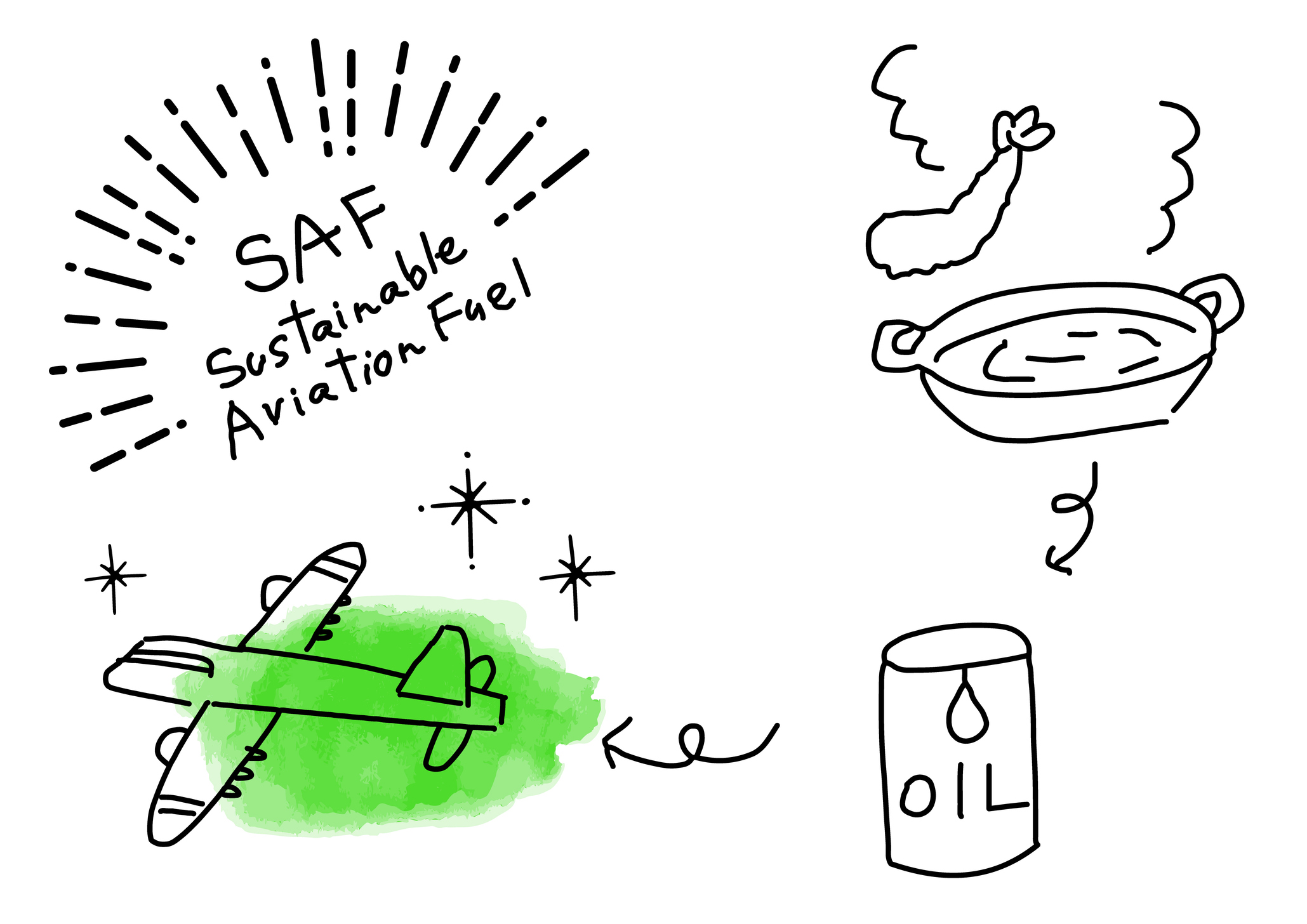
Thailand’s local production capabilities are also worth to be looking at. With the growing interest in SAF, the country has invested in building infrastructure to support SAF production, both from the government and the private sector, focusing on levering domestic resources. Thailand’s rich agricultural provides a plentiful supply of feedstocks, such as used cooking oil and agricultural residues, which are essential for producing SAF. Major companies in the energy sectors are also play important roles in the production of SAF, with the cooperation of one of the biggest aviation fuel services companies, they aim to start the production of SAF to be at 1,000,000 Liters per day mainly form used cooking oil, beginning at
the fourth quarter of 2024 for the global use in the aviation industry. 

Government and aviation sector cooperation must be strong for Thailand’s SAF effort to succeed. The Thai government will have to collaborate extensively with airlines, fuel companies, and other stakeholders to create a favourable climate for SAF adoption. This includes creating supportive legislation, providing financial incentives, and facilitating R&D. Key airlines have played an important role in furthering the SAF agenda. By investing in SAF and participating in trial programs, these carriers have shown their viability and encouraged greater industry participation. Furthermore, international cooperation has been crucial in Thailand’s SAF path. The country has formed various partnerships and agreements with international organizations to encourage, participates in an international aviation organization’s carbon offsetting and reduction plan, which promotes the use of SAF to reach emissions reduction targets.

Moreover, the Civil Aviation Authority of Thailand (CAAT) is positioned as a pivotal actor in driving forward and endorsing the new policy initiatives surrounding Sustainable Aviation Fuel (SAF). As Thailand advances its commitment to sustainability in aviation, CAAT’s proactive role becomes increasingly vital. They are tasked with not only advocating for SAF adoption but also with establishing robust regulatory frameworks that uphold international standards.

Broader Benefits of SAF: Beyond Carbon Emissions

One of the most compelling aspects of SAF is its potential to benefit industries beyond aviation, particularly in agricultural sectors. By utilizing agricultural residue and non-food crops as feedstocks for SAF production, the initiative supports the agricultural sector in several ways:

Boosting the Agricultural Economy

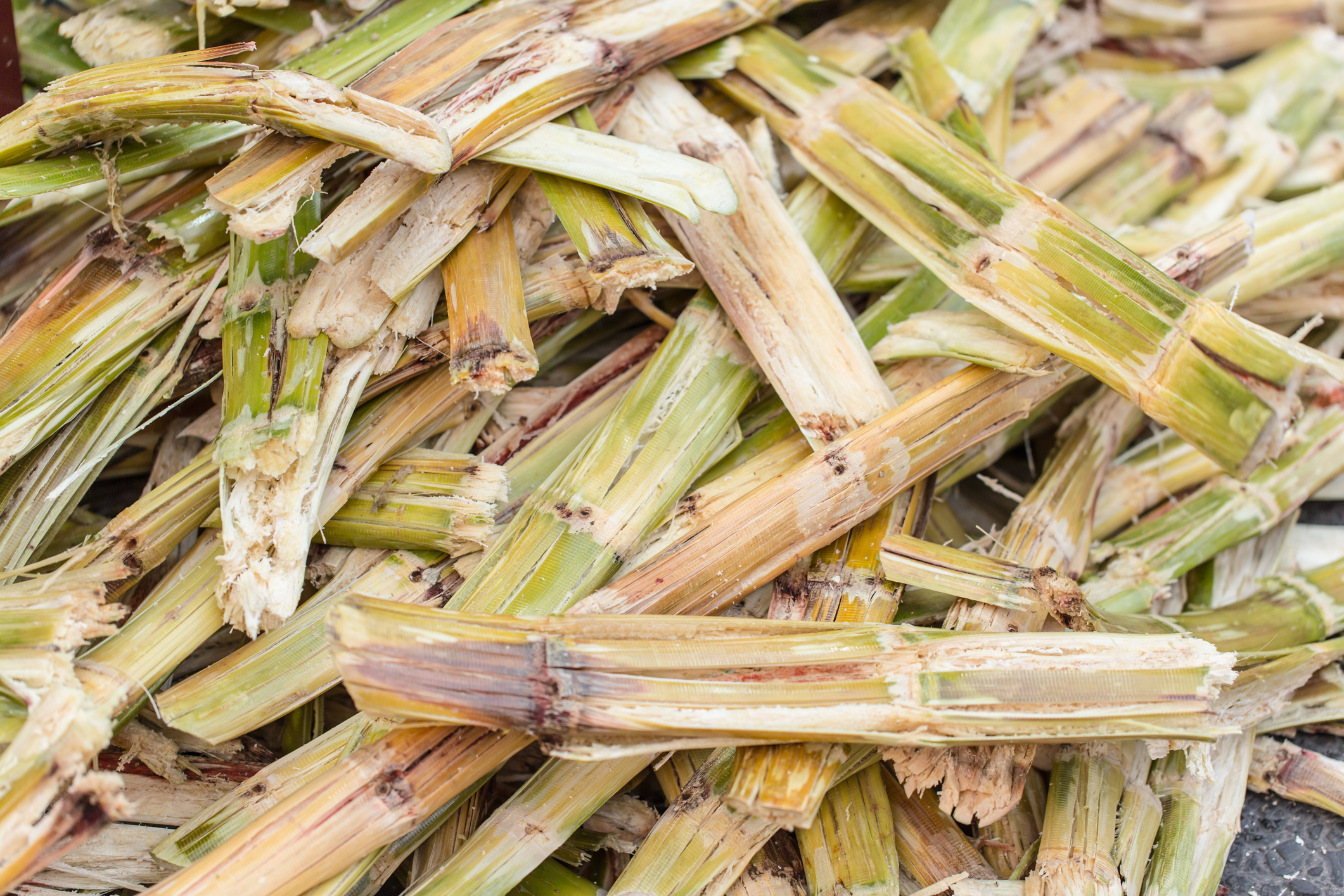
The additional revenue stream for local farmers could be generated by selling agricultural residues which would otherwise be considered waste, such as rice straw and sugarcane bagasse.  This could significantly enhance the livelihoods of local farmers and remarkably contribute to the rural economy. Moreover, new opportunities and markets may arise for the farmers by cultivating energy crops specifically for SAF production.

Enhancing Waste Management

SAF not only benefits the agricultural sector in terms of economic growth, but also helps the sector to promote better waste management techniques and practices by converting agricultural waste into valuable fuel. This not only reduces the environmental impact of agricultural waste disposal but also contributes to a circular economy where waste materials are repurposed and reused efficiently.

Challenge and Future Prospects

One of the primary challenges in SAF adoption is its economic viability. Currently, SAF is more expensive to produce than conventional jet fuel, primarily due to the high costs of feedstocks and production processes. This price disparity poses a significant barrier to widespread SAF adoption.

However, the Thai government has implemented various measures to address this challenge. Financial incentives, subsidies, and tax breaks are being offered to airlines that use SAF, helping to offset the higher costs. Additionally, continued investment in research and development is expected to drive down production costs over time, making SAF more economically competitive.

A critical development is the draft version of an act of legislation that is in place and expected to be approved by the Thai parliament by the middle of this year. This legislation aims to solidify the government’s commitment to SAF and provide a legal framework that supports its adoption and production. It is expected to include measures such as mandatory blending quotas, tax incentives, and subsidies, which will make SAF more competitive and attractive to investors.

CAAT’s active involvement ensures that the SAF initiatives align with global best practices and regulatory requirements. This includes overseeing the safety, quality, and operational standards of SAF production, distribution, and usage within Thailand’s aviation sector. By setting clear guidelines and standards, CAAT aims to instil confidence in SAF among stakeholders, including airlines, airports, and fuel suppliers. Furthermore, CAAT will be collaborating closely with government bodies and industry stakeholders to harmonize SAF policies with global aviation standards and environmental goals. Their efforts extend beyond regulatory oversight to fostering partnerships that promote research, innovation and the development of sustainable aviation solutions.

Looking ahead, continued policy support and incentives will be crucial for the growth of the SAF market in Thailand. The Thai government is committed to creating an enabling environment for SAF adoption, with plans to introduce more supportive policies and increase financial incentives. These measures are expected to drive greater investment in SAF production and adoption, helping Thailand achieve its sustainability goals. By fostering a conducive policy environment, Thailand can attract more players to the SAF market and ensure its long-term viability.

Takeaways 

Thailand’s SAF initiative represents a bold and proactive step towards sustainable aviation. By integrating government support, industry collaboration, and technological innovation, Thailand is paving the way for greener skies. The challenges are significant, but the opportunities are even greater. Continued efforts to promote SAF adoption will not only help Thailand achieve its sustainability goals but also position the country as a leader in the global transition to sustainable aviation. Moreover, the broader benefits to industries such as agriculture highlight the multi-faceted advantages of the SAF initiative, fostering a more sustainable and economically vibrant future.

At To70 Thailand, we are proud to be at the forefront of SAF initiatives in the country. Our team is actively involved in various projects and research efforts to explore and maximize the opportunities presented by SAF in Thailand’s aviation sector. Through our expertise and commitment, we are dedicated to driving forward the adoption and development of sustainable aviation fuels, contributing to a greener and more sustainable future for Thailand.


Read more Articles and News

Posted inEnvironment, Strategy, Sustainability & Innovation

Airports as Catalysts: Driving SAF Adoption Through Incentive Funds 

In an era marked by global efforts to combat climate change, the aviation industry faces growing scrutiny. Forecasts predict a substantial increase in passenger air travel in the coming years, amplifying concerns over the industry’s carbon emissions and underscoring the need for immediate action. This is where Sustainable Aviation Fuel (SAF) emerges as a groundbreaking solution to mitigate carbon emissions in aviation. Given that SAF can substantially reduce carbon emissions by up to 80% throughout its lifecycle compared to traditional jet fuel[1], airport incentives are needed to drive the production and adaption of SAF. 

Airports, acting as critical hubs within the aviation ecosystem, have a pivotal role in facilitating the availability and uptake of SAF. One powerful mechanism adopted by several airports is the SAF Incentive Fund, a strategic initiative designed to bridge the price gap between SAF and traditional jet fuel for airlines. The comprehensive details of the SAF Incentive Fund are outlined in the SAF Catalogue, a collaborative effort led by Stargate, To70, the University of Hasselt, and supported by Brussels Airport Company. 

How the SAF Incentive Fund works 

The SAF Incentive Fund is typically set up by the airport authority, often in collaboration with industry partners or stakeholders. The specific subsidy amount is determined based on various factors, including the type of SAF (e.g., biofuels or synthetic e-fuels), the current market price of SAF, and the fund’s available resources. 

Airlines that choose to refuel with SAF at the airport can apply for subsidies from the SAF Incentive Fund. This application process typically involves providing details about the SAF purchase, including the quantity, type of SAF, and associated costs. 

Once the application is approved and the subsidy amount is determined, the airport disburses the subsidy to the airline. This can be done in various ways, such as providing a fixed amount or a percentage of the price difference between SAF and traditional jet fuel. 

By doing so, the financial assistance effectively reduces the net cost of SAF for the airline, making it more economically viable compared to traditional jet fuel. 

Leading Airports in Establishing SAF Incentive Programs 

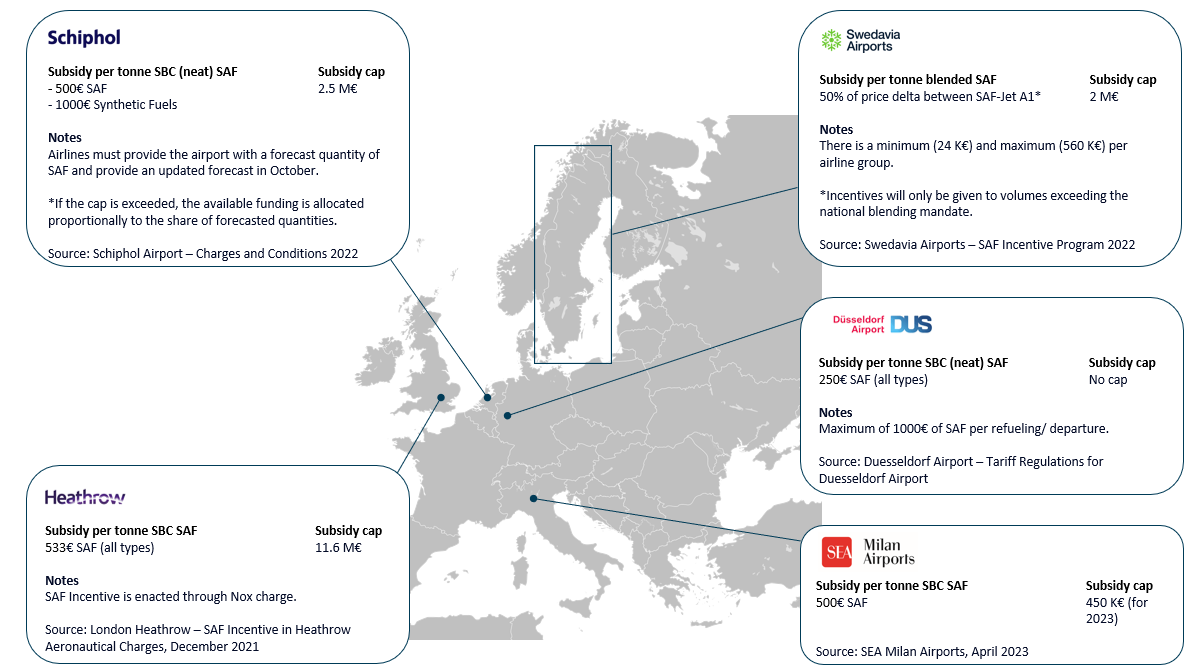
Several leading airports like Schiphol, Swedavia, Heathrow, Dusseldorf, and Milan have already taken action by establishing SAF Incentive Funds to accelerate the aviation industry’s transition to sustainable practices. 

Impact of SAF Adoption at Leading Airports 

In 2022, Heathrow became the first airport globally to launch a SAF Incentive Program that covers up to 50% of the extra cost of SAF, thereby reducing its financial burden on airlines. Heathrow now has set an ambitious objective to triple the percentage of SAF used at the airport in 2023 to approximately 1.5% and become one of the world’s leading airport users of SAF[2]. 

Furthermore, at Schiphol Airport, when airlines refuel with SAF, they receive subsidies of €500 per metric tonne of SAF (biofuels) and €1,000 per metric tonne of e-fuels (synthetic kerosene). To ensure a sufficient supply of SAF, Schiphol supported Neste (their SAF supplier) in acquiring a share of AFS (the fuel distributor at the airport). While Neste’s current production sits at 100,000 tonnes, the company has ambitious plans to scale up output in Rotterdam and Singapore to 1.5 million tonnes[3] 

These examples illustrate how airports can utilize financial incentives to stimulate SAF production. Such actions send a clear market signal about SAF’s crucial role in the long-term decarbonization of aviation. In addition, they encourage investments that can enhance production volumes and subsequently reduce costs.  

Taking Action as an Airport 

The growing number of airports joining SAF Incentive Funds reflects a rising commitment among airports to take a leading role in sustainability. However, many airports often lack clarity on the specific steps required to establish such initiatives. To address this need, we provide guidance on the SAF incentives as described in the Stargate SAF Actions Catalogue to efficiently kickstart a SAF Incentive Program.  

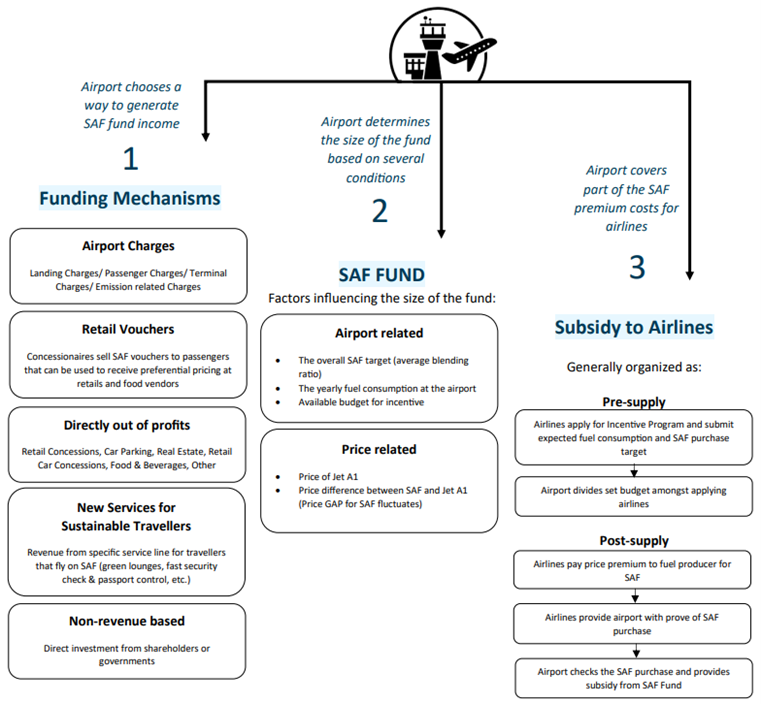
The following figure shows the step-wise approach: 

  1. First, the airport selects a funding mechanism from a variety of choices, as depicted in the first step of the figure, to generate revenue for the SAF fund. 
  2. Next, the airport establishes the conditions for the size of the SAF fund. These may be influenced by airport-specific factors, such as annual fuel consumption, as well as price-related factors like the market price of Jet A1. 
  3. Finally, airlines can apply for the SAF fund, and the airport grants the subsidy by covering a portion of the SAF premium expenses.  

By following these steps, airports can establish a fund to stimulate SAF adoption on their premises. To70 can support airports to apply these steps within their own unique context, – and provide analysis and eventual testing and implementation. By doing so, airports can use their unique infrastructure position and promote sustainable practices among relevant stakeholders. 


[1] Jiang, C., & Yang, H. (2021). Carbon tax or sustainable aviation fuel quota. Energy Economics, 103, 105570. 


Check out our open vacancies around the globe!